
 Save
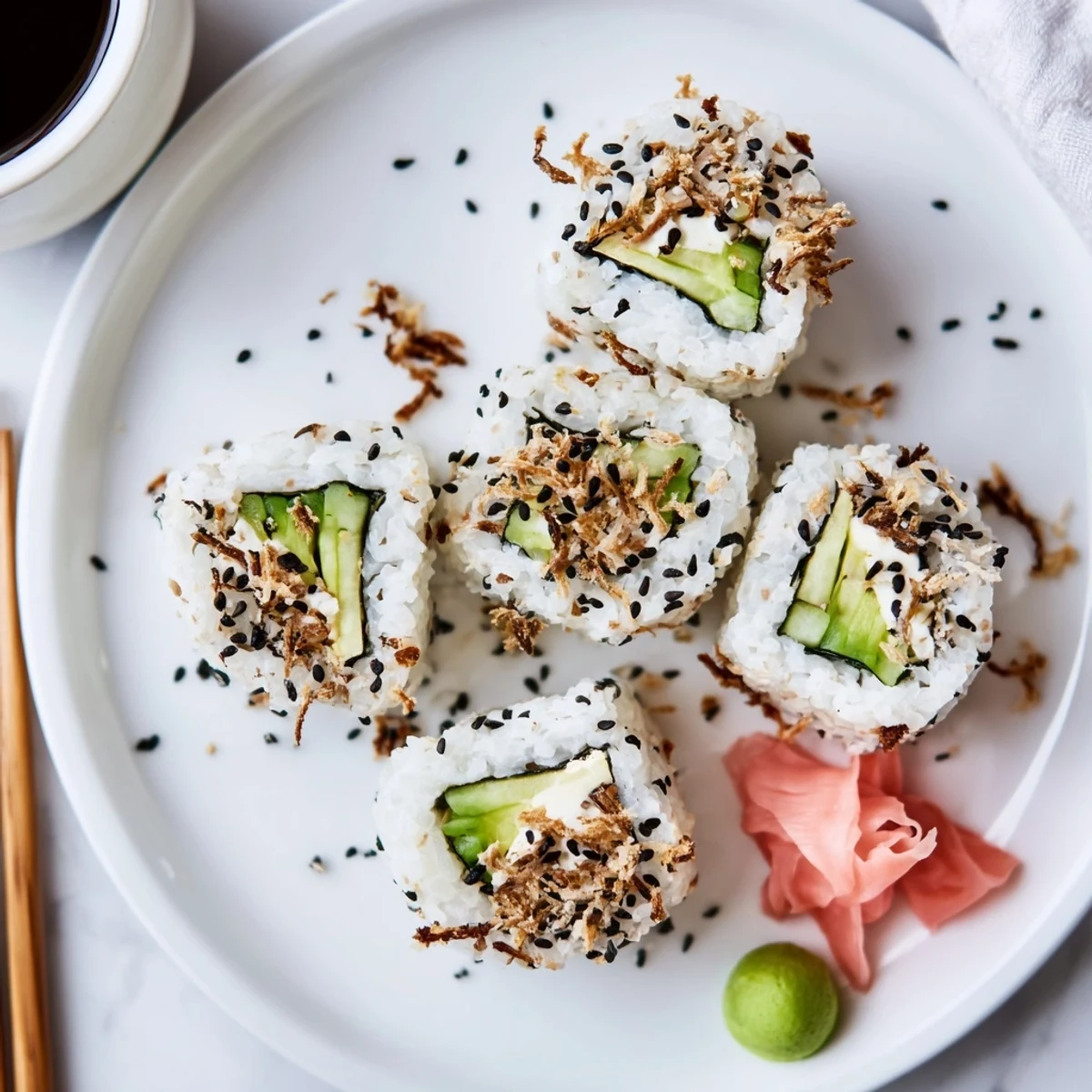
Save This California Crunch Roll layers seasoned sushi rice over nori, spreads a crab-mayonnaise filling with ripe avocado and cucumber, then flips and tops the exterior with tempura flakes and sesame for a pronounced crunch. Rice is seasoned with rice vinegar, sugar and salt and cooled while fanned. Use a bamboo mat to roll tightly, slice with a wet sharp knife, and serve with soy, pickled ginger and wasabi. Yields four rolls (about 24 pieces) in roughly 50 minutes.
The satisfying crackle of tempura flakes between your teeth is something you never forget once you experience it, and that sound alone is reason enough to make California Crunch Rolls at home. My first attempt ended with rice stuck to every surface in the kitchen, including the cat, who watched the whole spectacle from the counter with judgment in her eyes. Sushi at home sounds intimidating until you realize it is really just an assembly project with delicious rewards waiting at the end.
I made these for a friends birthday potluck expecting them to disappear quickly, but I was not prepared for the silence that fell over the room when people took their first bite. Everyone just stopped talking and chewed slowly, nodding at each other with full mouths. That kind of wordless appreciation is the highest compliment a home cook can receive.
Ingredients
- Sushi rice (2 cups): Do not substitute with regular long grain rice because the starch content is what gives you that sticky, cohesive texture that holds the roll together.
- Water (2 1/2 cups): The ratio matters more than you think, so measure carefully for perfectly tender grains.
- Rice vinegar (1/4 cup): This provides the signature tang and subtle sweetness that makes sushi rice unmistakable.
- Sugar (2 tbsp): Balances the acidity of the vinegar and rounds out the seasoning beautifully.
- Salt (1 tsp): A small amount that elevates every other flavor in the rice.
- Imitation crab sticks, 200g: Budget friendly and classic, though real crab meat works wonderfully if you are feeling indulgent.
- Ripe avocado (1): The buttery texture is non negotiable, so pick one that yields slightly when pressed.
- Small cucumber (1): Adds a refreshing snap and lightness that cuts through the richness.
- Japanese mayonnaise (2 tbsp): Kewpie specifically has a richer yolkiness that regular mayo simply cannot replicate.
- Nori sheets (4): These should be crisp and dark green, not pale or flexible straight from the package.
- Tempura flakes (1 cup): The star of the show, available at Asian grocers or homemade from leftover batter.
- Toasted sesame seeds (2 tbsp): Nutty aroma and visual appeal in equal measure.
- Black sesame seeds (1 tbsp, optional): Purely for contrast and a slightly earthier finish.
- Soy sauce, pickled ginger, wasabi: The essential trio for dipping and cleansing the palate between pieces.
Instructions
- Wash and cook the rice:
- Rinse the sushi rice under cold running water, swirling gently with your hand, until the water turns from cloudy to nearly clear. Combine with the measured water in a pot, bring it to a boil, then cover tightly, reduce the heat to low, and let it simmer for 15 minutes before removing from heat to steam undisturbed for another 10 minutes.
- Season and cool the rice:
- Gently warm the rice vinegar, sugar, and salt in a small saucepan just until the solids dissolve completely. Fold this mixture into the hot rice with a slicing motion while fanning it so it cools quickly and develops a beautiful glossy sheen.
- Prepare the crab filling:
- Shred or cut the imitation crab into thin strips and fold in the Japanese mayonnaise until every piece is lightly coated. Taste it and imagine how good it will be tucked inside rice and seaweed.
- Set up your rolling station:
- Lay a bamboo sushi mat on your work surface and cover it tightly with plastic wrap to prevent sticking. Place a sheet of nori shiny side down on the mat and keep a small bowl of water nearby for wetting your hands.
- Spread the rice:
- With damp hands, press an even layer of seasoned rice about a half cup over the nori, leaving a small border at the top edge. Sprinkle tempura flakes and sesame seeds directly onto the rice, then carefully flip the whole sheet so the rice faces down.
- Layer the fillings:
- Arrange a neat line of the crab mixture, avocado slices, and julienned cucumber along the bottom edge of the nori closest to you. Keep the filling compact rather than scattered for a tighter, cleaner roll.
- Roll with confidence:
- Lift the edge of the bamboo mat nearest you and roll forward over the filling, tucking gently as you go while applying even pressure. Continue rolling until sealed, then give the mat one more firm squeeze to shape it.
- Slice cleanly:
- Wet the blade of a very sharp knife and wipe it between each cut to prevent sticking and tearing. Slice each roll into six even pieces, letting the knife do the work with gentle downward pressure.
- Add the finishing crunch:
- Press extra tempura flakes onto the top of each slice for maximum textural impact right before serving. Arrange on a plate with soy sauce, pickled ginger, and wasabi.
 Save
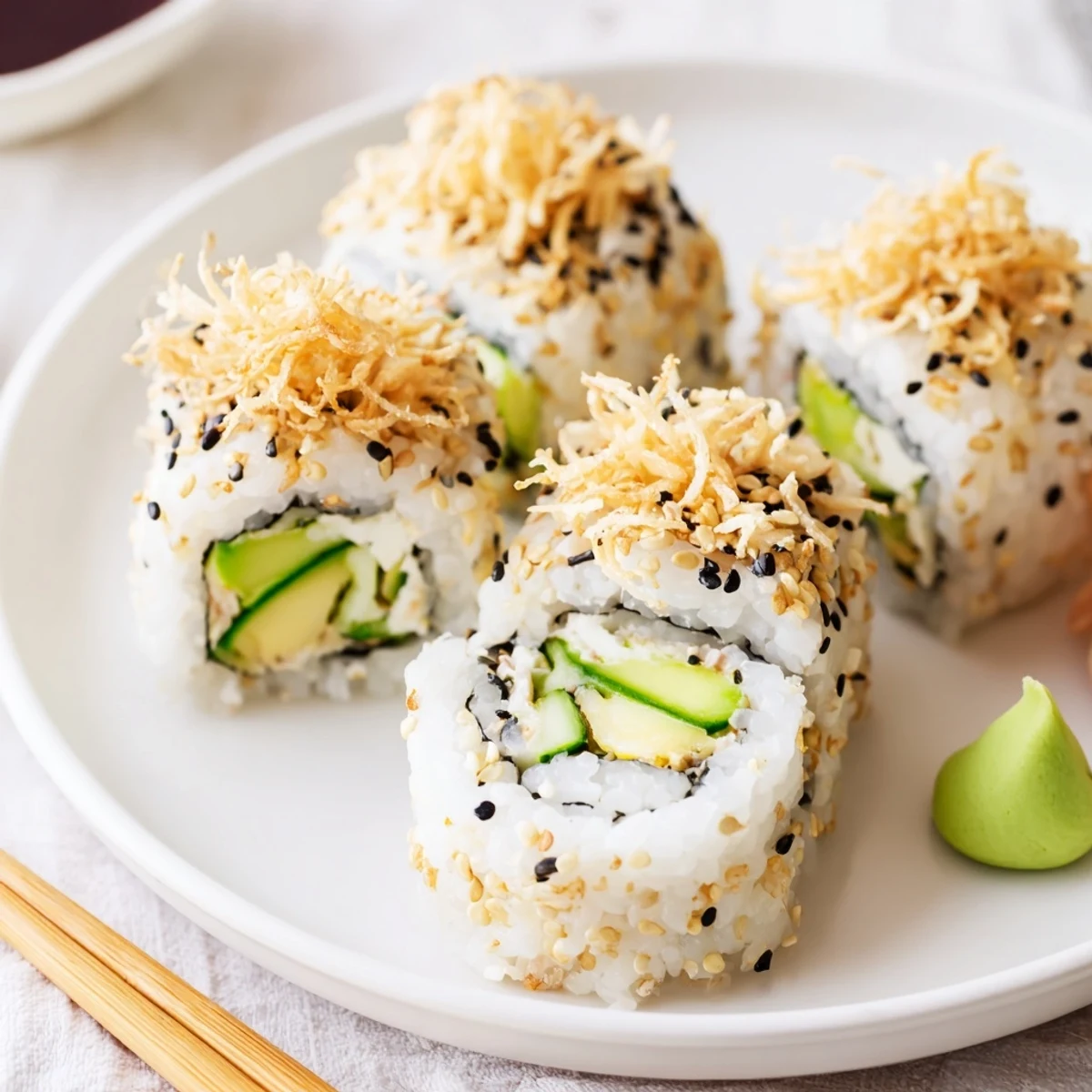
Save There is something deeply satisfying about slicing into a roll you built with your own hands and seeing the neat layers of green, white, and orange inside. It transforms a weeknight dinner into a small celebration without any extra effort.
Rolling Without Falling Apart
The most common frustration for beginners is rolls that unravel or fall apart when sliced, and almost always the culprit is either too much filling or rice that has not been spread to the edges. Practice with less filling than you think you need on your first roll and increase from there. Keep a damp towel beside you to wipe your knife between every single slice.
Making It Your Own
Once you are comfortable with the basic technique, this roll becomes a canvas for whatever flavors you are craving. A drizzle of spicy mayo mixed with sriracha and kewpie over the finished slices adds a fiery kick, while a thin stream of eel sauce brings smoky sweetness. Real crab meat elevates it to dinner party territory without changing anything else about the method.
Storing and Serving Leftovers
Sushi rolls are genuinely best eaten immediately because the tempura flakes soften over time and the nori loses its structure in the refrigerator. If you must store them, wrap tightly in plastic and consume within a few hours, adding fresh crunch just before eating.
- Squeeze a little lemon juice on leftover avocado to slow browning if assembling ahead.
- Keep the tempura flakes in a separate container until the last possible moment for best texture.
- Remember that even slightly soft rolls still taste wonderful, so do not stress too much.
 Save
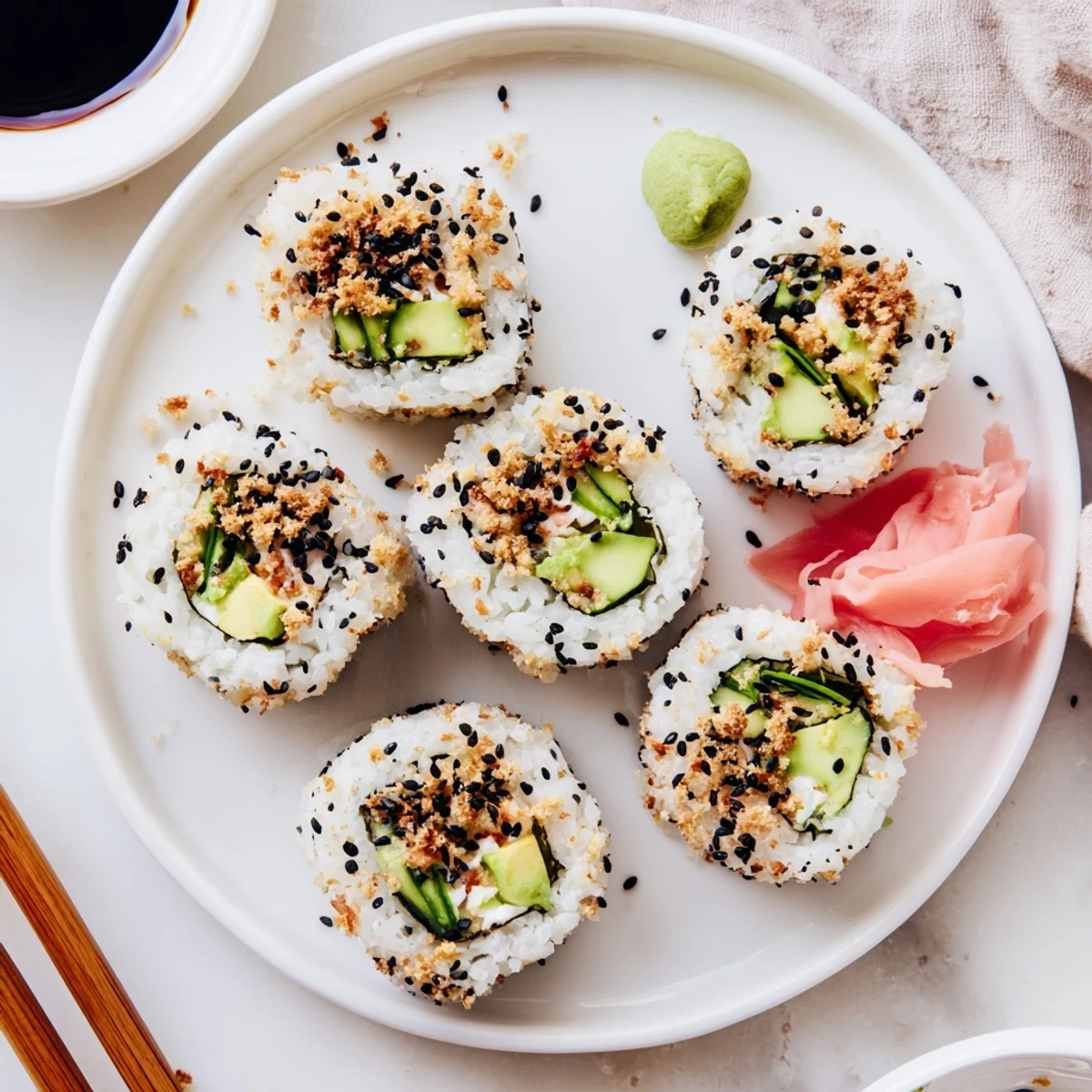
Save Making sushi at home is less about perfection and more about the joy of building something delicious with your hands. Every roll gets a little tighter and a little prettier, and before long you will be the person everyone calls for dinner parties.
Recipe FAQs
- → How do I get fluffy, non-sticky sushi rice?
-
Rinse the rice under cold water until clear, then simmer with the correct water ratio. Let it rest covered for 10 minutes after cooking, then fold in warm vinegar-sugar-salt mixture while fanning to cool quickly and separate grains.
- → What are tempura flakes and how do I keep them crunchy?
-
Tempura flakes (tenkasu) are bits of fried tempura batter. Scatter them on the exterior just before serving or press them onto the rice and roll; avoid long storage to maintain their crisp texture.
- → How ripe should the avocado be for rolling?
-
Choose avocado that yields slightly to gentle pressure but isn't mushy. Thin, even slices will fold smoothly in the roll without crushing or turning brown quickly.
- → Can I swap imitation crab for real crab or other fillings?
-
Yes. Use cooked real crab for a sweeter, chunkier texture. Alternatives include cooked shrimp, smoked salmon, or a marinated vegetable filling for a pescatarian-friendly change.
- → What's the best way to slice rolls without squashing them?
-
Use a very sharp knife moistened with water, wipe between cuts, and make a single clean slicing motion. Chill the roll briefly if the filling is soft to firm it up before slicing.
- → How can I make this suitable for gluten-free diets?
-
Swap regular soy sauce for gluten-free tamari and ensure tempura flakes are made from gluten-free batter or omitted; check all labels on packaged ingredients for hidden wheat.