
 Save
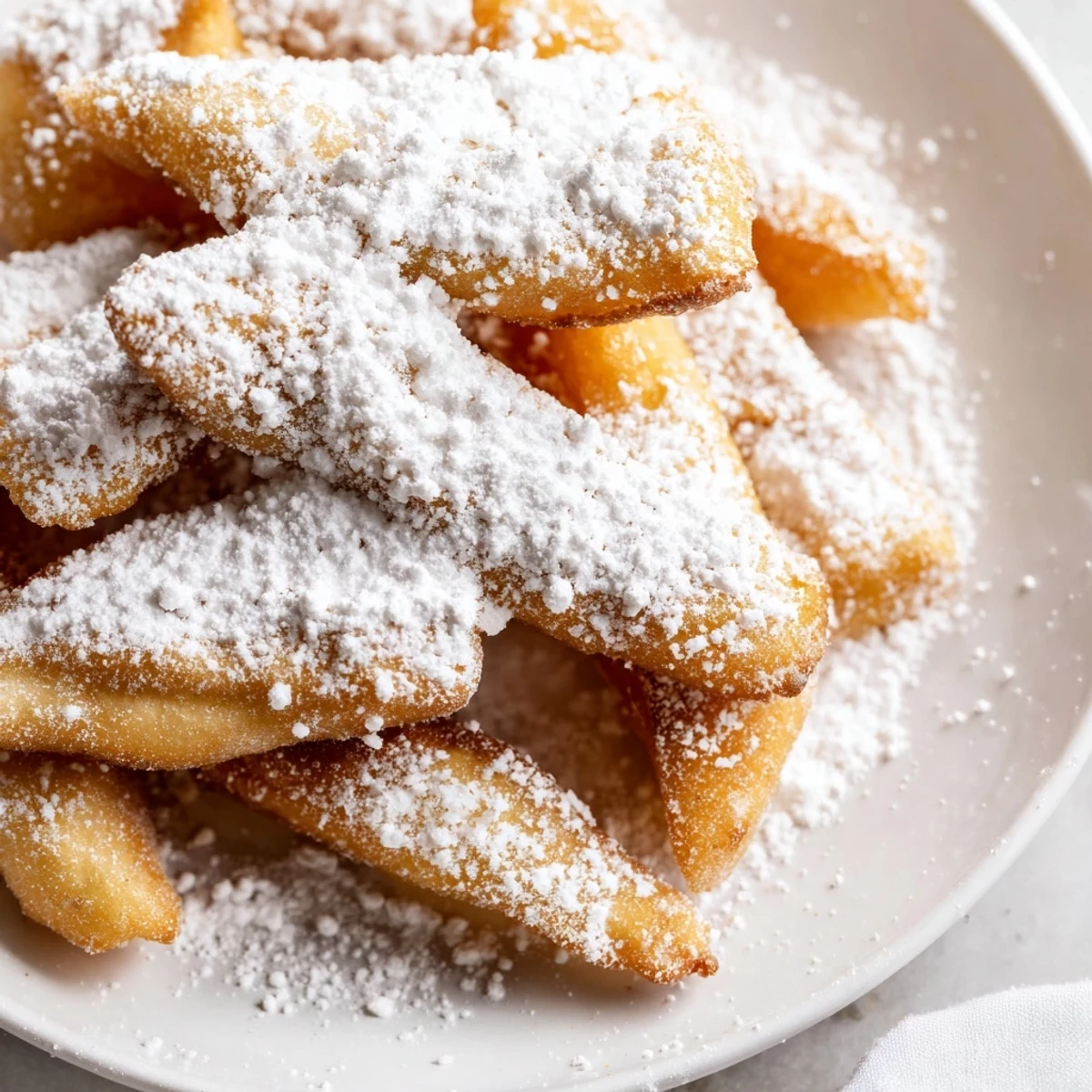
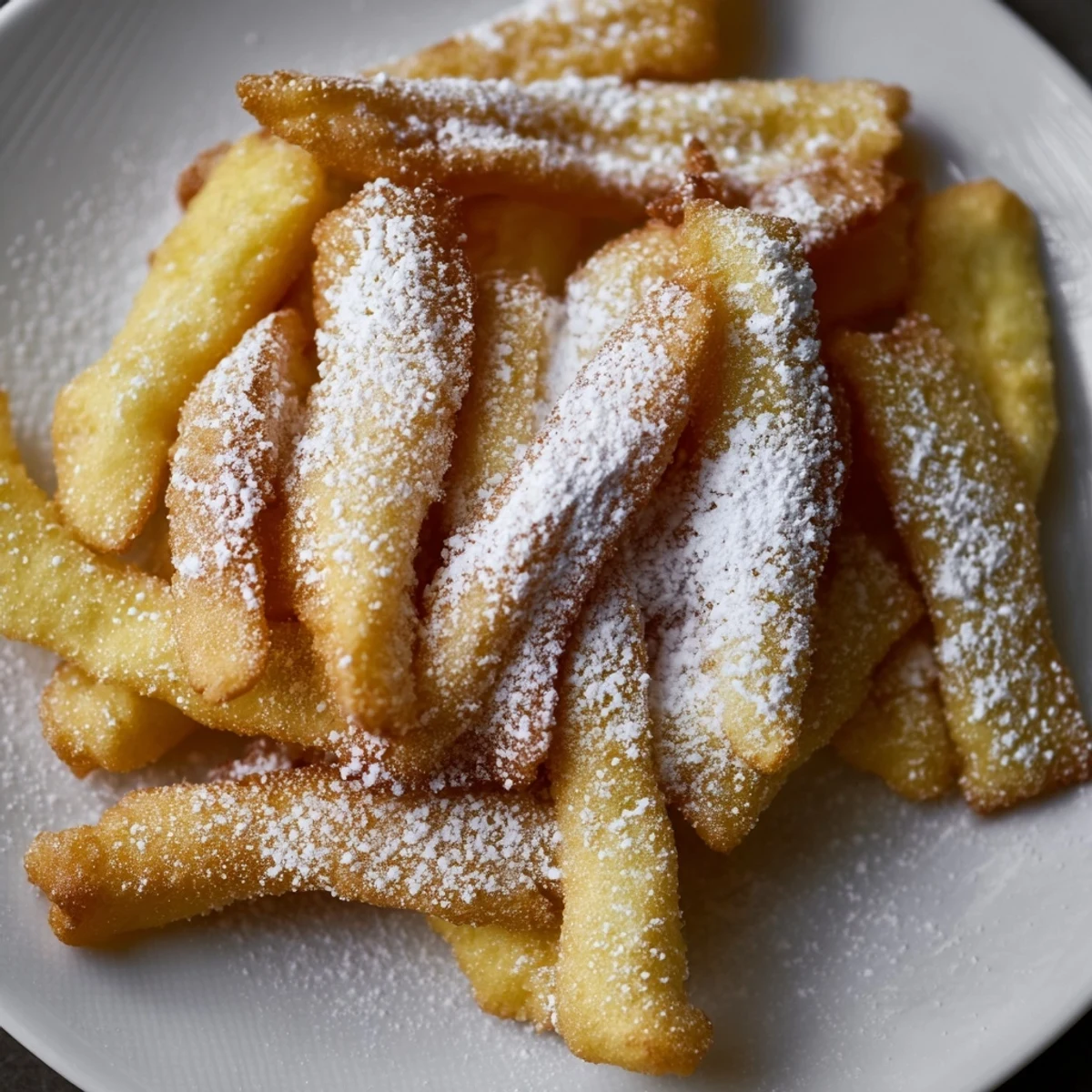
Save These beignet fries are made from a soft, elastic dough that is rolled and cut into strips before frying until golden and puffed. They are generously dusted with powdered sugar for a sweet finish. The light, crispy texture paired with the delicate sweetness evokes the charm of classic New Orleans desserts. Ideal for quick preparation, they can be served warm and paired with sauces like chocolate or caramel for added flavor. Perfect for casual sharing or satisfying a sweet craving.
The smell of frying dough hitting hot oil instantly transports me to a crowded morning at Café du Monde, where powdered sugar clouds linger in the air and everyone walks away with white dusting on their clothes. I wanted that experience in my own kitchen but something more playful and shareable than the traditional square beignets. These fry-shaped beignets became my answer for casual gatherings, where friends can grab and dip without the mess of tackling a full pastry. There is something joyful about finger food that still feels indulgent.
I first made these for a Mardi Gras party years ago when I realized too late that I had no beignet pans or the patience to pipe perfect squares. Cutting the dough into strips felt almost too simple, like I was cheating the tradition somehow. But watching my guests crowd around the bowl, fingers reaching for just one more, convinced me that sometimes breaking rules tastes better. Now they are the one thing my friends actually request by name.
Ingredients
- Active dry yeast: The magic that makes these puff up beautifully, so do not skip the foam test or rush this step
- Warm water: Must be exactly 110°F or the yeast will not activate properly, too hot kills it and too cold does nothing
- Granulated sugar: Feeds the yeast and adds just enough sweetness to balance the savory dough
- Salt: Do not be tempted to skip this, it is what keeps the fried dough from tasting like plain oil
- Egg: Adds richness and helps create that tender interior texture under the crispy crust
- Whole milk: Room temperature is crucial here, cold milk will shock your yeast and slow everything down
- All-purpose flour: Bread flour creates too much chew for this delicate treat, stick with regular flour
- Unsalted butter melted: Adds flavor and keeps the dough from becoming tough as it kneads
- Vegetable oil: Need at least 2 inches deep in your pot for proper frying without crowding
- Powdered sugar: The finishing touch that makes these instantly recognizable, be generous
Instructions
- Wake up the yeast:
- Dissolve the yeast in warm water and watch for that foamy layer that proves it is alive and ready to work
- Build the base:
- Whisk in sugar, salt, egg, and milk until everything is combined and the mixture looks smooth
- Start the dough:
- Stir in 2 cups of flour first, mixing until any lumps disappear before adding anything else
- Add fat and finish:
- Pour in melted butter and remaining flour, stirring until a soft dough forms that pulls away from the sides
- Knead it out:
- Turn onto floured surface and knead for 4 to 5 minutes until the dough feels smooth and bounces back when you press it
- Let it rise:
- Place dough in a greased bowl, cover, and wait an hour until it has doubled in size
- Shape your fries:
- Roll dough to 1/2 inch thickness and cut strips about 1/2 inch wide and 3 inches long
- Heat the oil:
- Get your oil to 350°F and use a thermometer because guessing leads to burnt or greasy results
- Fry in batches:
- Cook the strips 2 to 3 minutes each batch, turning until golden brown and puffed all over
- Drain and dust:
- Let them rest on paper towels then coat generously with powdered sugar while still warm
 Save
Save My niece called them sugar dippers during her birthday party last year and the name stuck in our family. There is something about seeing kids and adults both reaching into the same bowl, fingers dusted with white powder, that reminds me why I started cooking in the first place. Food that brings people together, however messily, is always worth making.
Perfecting the Fry Shape
Keeping the strips uniform helps them cook evenly, so try to cut them the same width. A pizza cutter works better than a knife for this task and saves so much time. I line my cutting board with a little extra flour to prevent sticking while I work through the dough.
Oil Temperature Secrets
Investing in a cheap kitchen thermometer changed my frying game completely. The oil will drop in temperature when you add the dough, so adjust the heat between batches to maintain that sweet spot of 350°F. I keep my thermometer clipped to the side of the pot for constant monitoring.
Serving and Storage
These are absolutely best fresh and warm, but if you must make them ahead, reheat briefly in a 350°F oven to recrisp the exterior. The microwave will make them tough and sad, so avoid that shortcut completely. Set up a dipping sauce station with chocolate, caramel, or even fruit preserves for extra fun.
- Place a cooling rack over paper towels to drain excess oil more effectively
- Use a mesh sieve for the most even powdered sugar coating instead of sprinkling by hand
- Keep fried beignets warm in a 200°F oven while finishing the remaining batches
 Save
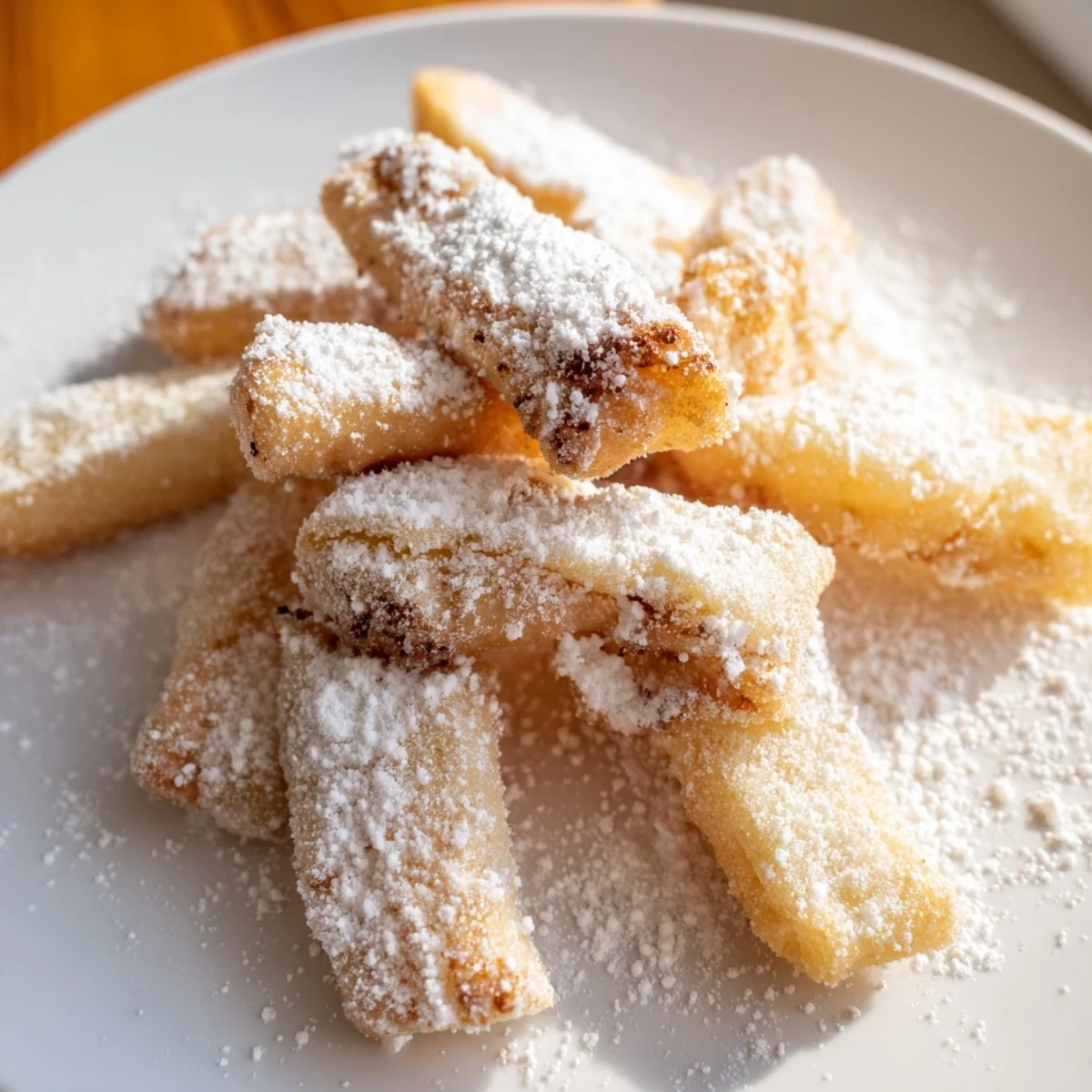
Save Whether for a party or a weekend treat, these beignet fries bring a little New Orleans magic right to your kitchen.
Recipe FAQs
- → What type of dough is used for beignet fries?
-
A soft dough made with yeast, flour, milk, sugar, egg, and butter, kneaded until smooth and left to rise before frying.
- → How do I achieve a crispy texture?
-
Deep frying the dough strips at around 350°F until golden brown and puffed ensures a crisp exterior and tender inside.
- → Can I add different toppings or dips?
-
Yes, these beignet fries pair well with chocolate, caramel, or fruit-based dipping sauces for extra flavor.
- → Is there a substitution for all-purpose flour?
-
Using bread flour for half the amount can create a chewier texture if preferred.
- → How should leftovers be stored or reheated?
-
Best enjoyed fresh, but can be briefly reheated in an oven to restore crispness without sacrificing texture.