
 Save
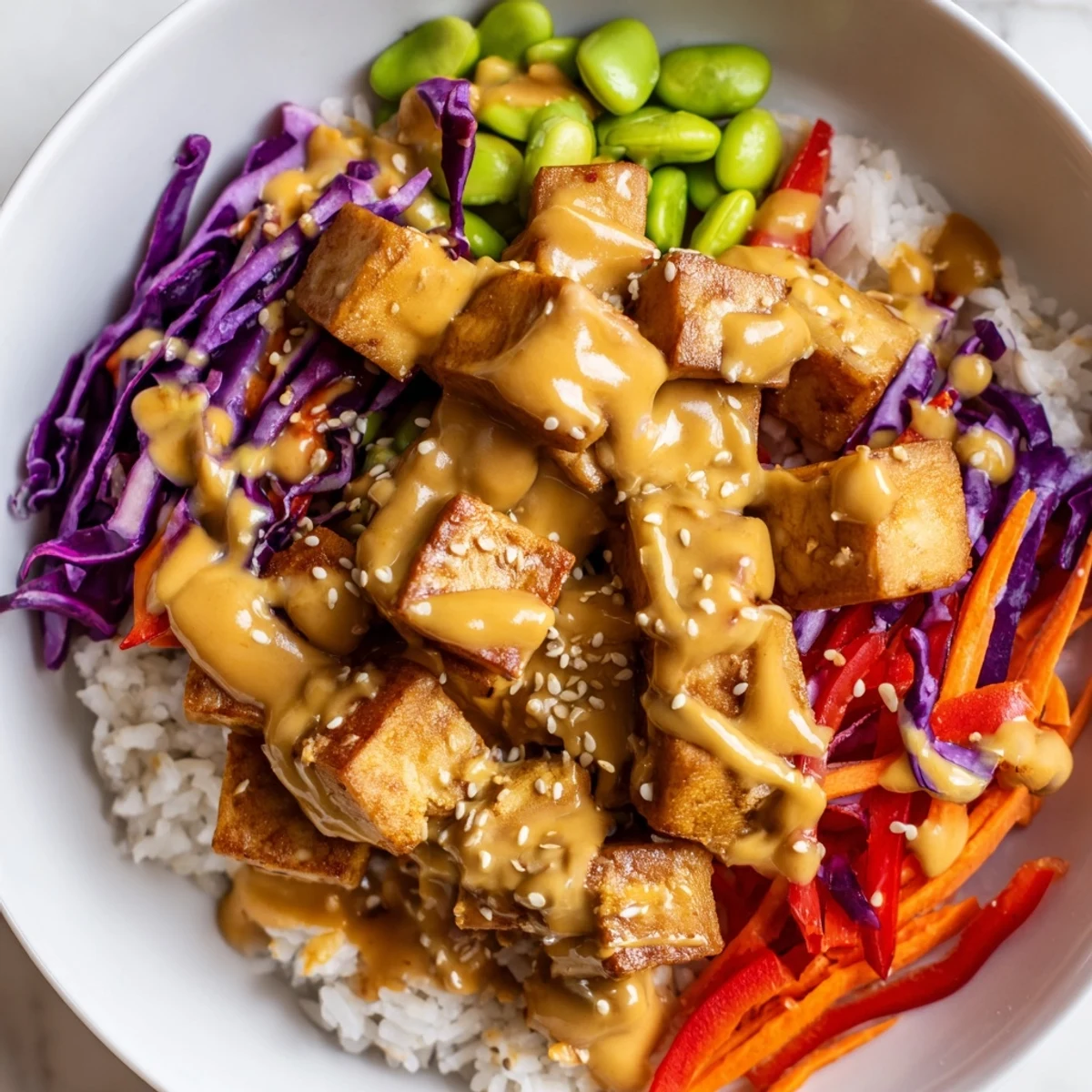
Save This tofu rice bowl brings together golden, pan-fried tofu cubes with a crunchy cornstarch coating, served over fluffy jasmine rice.
The star of the dish is a creamy peanut sauce made from peanut butter, soy sauce, rice vinegar, lime juice, and a hint of ginger and garlic.
Loaded with colorful vegetables like julienned carrots, red cabbage, bell pepper, and edamame, it's as visually appealing as it is satisfying.
Ready in just 40 minutes with minimal prep, this vegan-friendly bowl works beautifully for meal prep or a quick weeknight dinner.
The exhaust fan in my tiny apartment kitchen was useless against the smoke billowing from the skillet, but honestly, the smell of crisping tofu made me not care one bit. That first attempt at a peanut sauce rice bowl was chaotic, yet something about the combination of crunchy vegetables and that impossibly creamy sauce kept me coming back to tweak it until it became a weekly ritual. This version is the one that finally stuck: crispy tofu cubes nestled over fluffy rice with a rainbow of vegetables and a peanut sauce so good you will want to eat it with a spoon.
A friend stopped by unexpectedly one Tuesday evening and I scrambled to throw together something that looked intentional rather than desperate. I piled crispy tofu and julienned vegetables over rice, drizzled that golden peanut sauce on top, and watched her eyes go wide at the first bite. She now texts me every week asking when we are having bowl night again.
Ingredients
- Firm tofu (400 g): Pressing it well is the single most important step for achieving that shatteringly crisp exterior.
- Soy sauce (2 tbsp for marinade, 2 tbsp for sauce): Use a good quality one since it anchors both the tofu flavor and the sauce.
- Cornstarch (1 tbsp): This is the secret to getting tofu crispy without deep frying, so do not skip it.
- Sesame oil (1 tbsp): Toasted sesame oil adds a nutty depth that regular oil simply cannot replicate here.
- Jasmine or basmati rice (250 g): Jasmine gives a lovely fragrant base, but basmati works beautifully if that is what you have.
- Carrot (1 medium, julienned): Cut them thin enough to have a slight bend without breaking for the best texture against the soft rice.
- Red cabbage (1 cup, thinly sliced): The color alone earns its place, but the crunch is what really makes it essential.
- Red bell pepper (1, thinly sliced): Its natural sweetness balances the savory depth of the soy sauce and peanut butter.
- Edamame (100 g, cooked and shelled): A quick protein boost that also happens to look beautiful scattered across the bowl.
- Spring onions (2, sliced): Slice them on a steep diagonal for a restaurant quality finish.
- Creamy peanut butter (80 g): Natural peanut butter with no added sugar gives you control over the final sweetness.
- Rice vinegar (1 tbsp): The gentle acidity prevents the sauce from feeling too heavy or cloying.
- Lime juice (1 tbsp): Fresh is nonnegotiable here since the bottled stuff tastes flat and metallic by comparison.
- Maple syrup or honey (2 tsp): Just enough sweetness to round out the salty and sour elements in the sauce.
- Garlic (1 clove, minced): One clove is enough to be present without overpowering the peanut flavor.
- Fresh ginger (1 tsp, grated): Rub it on a microplane directly into the sauce for the freshest possible flavor.
- Warm water (60 ml): Add gradually until the sauce reaches a pourable consistency that coats the back of a spoon.
- Sesame seeds and fresh coriander: The finishing touches that make the bowl look as good as it tastes.
Instructions
- Cook the rice:
- Rinse the rice under cold water until it runs completely clear, then bring 500 ml of salted water to a boil. Drop in the rice, reduce to the lowest heat, cover tightly, and let it steam undisturbed for about 13 minutes. Fluff gently with a fork and set aside while you tackle everything else.
- Marinate and coat the tofu:
- Toss your pressed and cubed tofu with soy sauce and let it sit for five minutes so it soaks up the saltiness. Sprinkle cornstarch over the top and toss with your hands until every cube has a light even coating that will transform into a crispy shell.
- Crisp the tofu:
- Heat sesame oil in a large nonstick skillet over medium heat and add the tofu in a single layer without crowding. Let it cook undisturbed for three minutes before turning, repeating until every side is deeply golden and audibly crunchy when you nudge it.
- Whisk the peanut sauce:
- Combine peanut butter, soy sauce, rice vinegar, lime juice, maple syrup, garlic, ginger, and warm water in a bowl. Whisk vigorously until it transforms from a stubborn paste into a silky pourable sauce, adding another splash of warm water if needed.
- Build the bowls:
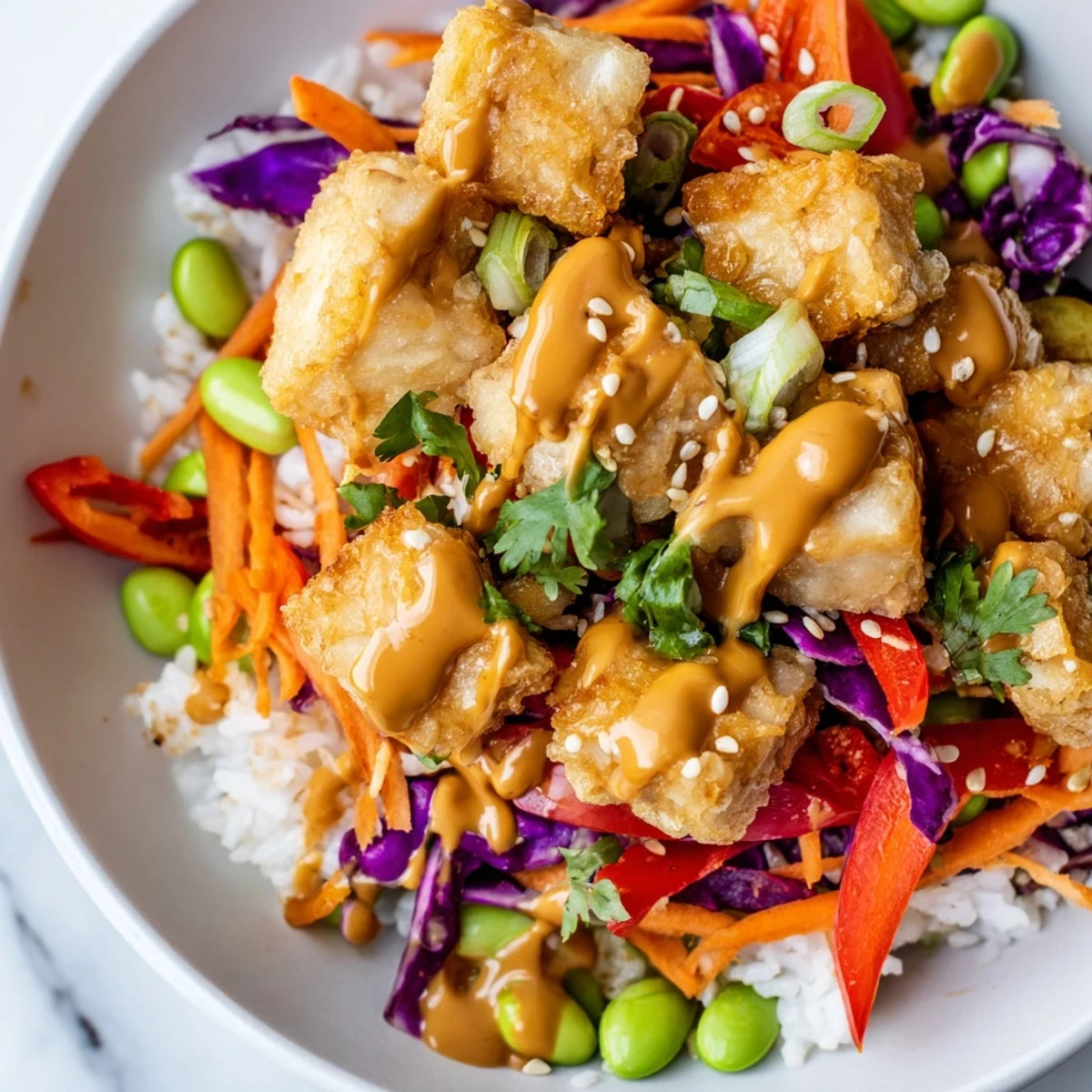
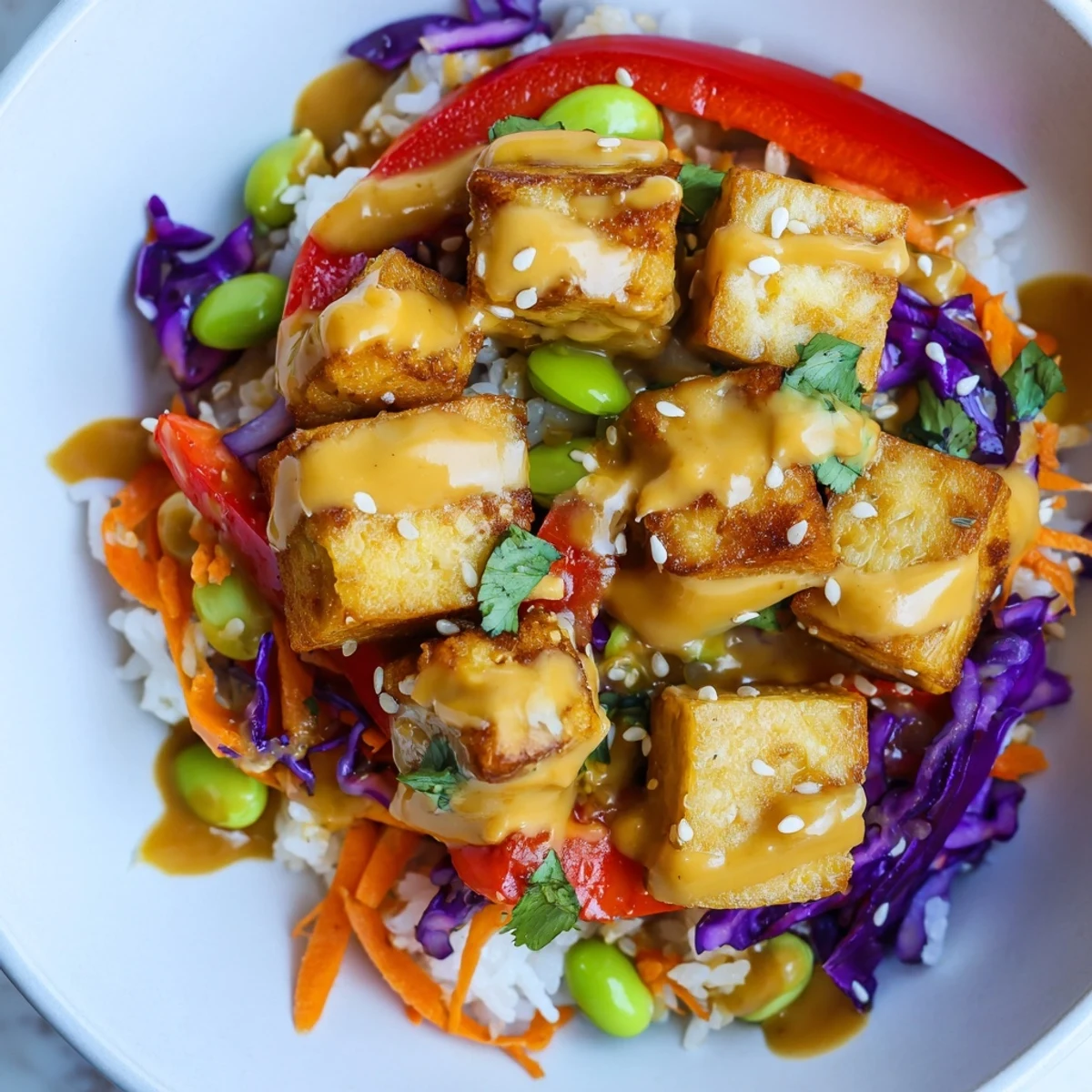
- Divide the fluffy rice among four bowls and arrange the tofu, julienned carrot, sliced cabbage, bell pepper, edamame, and spring onions in colorful clusters on top. Drizzle the peanut sauce generously over everything, then finish with a scatter of sesame seeds and torn coriander leaves.
 Save
Save I once packed leftovers of this bowl for a park picnic and a stranger on the bench next to me asked what smelled so incredible. Sharing the extra portion felt like the highest compliment a recipe could receive.
Swapping Vegetables With the Seasons
The beauty of a rice bowl is that nothing is sacred except the sauce and the rice, so let the produce section guide you. In summer, handfuls of raw zucchini ribbons and shaved radishes bring a cooling crunch that feels effortless. When the weather cools, try quick sauteed bok choy or roasted broccoli florets tossed with a pinch of chili flakes for warmth.
Making It Your Own With Sauces
Once you nail the basic peanut sauce, start playing by adding a spoonful of sriracha for heat or a dollop of coconut milk for a richer, milder version. A splash of tamari keeps it gluten free without sacrificing any of that deep savory backbone. My current obsession is stirring in a teaspoon of miso paste, which adds a funky complexity that makes the whole bowl feel unexpectedly sophisticated.
Storing and Reheating Without Sadness
The best way to enjoy this bowl is freshly assembled, but busy schedules demand practicality, so here is how I handle leftovers. Store each component separately in airtight containers and the tofu will stay crispy for up to three days. Reheat the tofu in a dry skillet for two minutes per side rather than using a microwave, which turns it rubbery.
- Keep the peanut sauce in a separate jar and stir in a splash of warm water before drizzling.
- Prep the vegetables a day ahead and store them in a container lined with a damp paper towel for maximum crunch.
- Always taste the sauce before serving since flavors can dull overnight in the refrigerator.
 Save
Save This bowl has a way of making a random Tuesday feel a little more special, and I hope it does the same for you. Trust the process, taste as you go, and never apologize for extra peanut sauce.
Recipe FAQs
- → How do I get the tofu extra crispy?
-
Press the tofu firmly for at least 15 minutes to remove excess moisture, then toss with cornstarch before pan-frying in hot sesame oil.
Cook without moving the cubes for 3–4 minutes per side until each face turns deep golden brown.
- → Can I make the peanut sauce ahead of time?
-
Yes, the peanut sauce stores well in an airtight container in the refrigerator for up to 5 days.
Whisk in a splash of warm water before serving to loosen the consistency, as it thickens when chilled.
- → What vegetables work best as substitutions?
-
Nearly any crisp or crunchy vegetable pairs well here—try shredded purple cabbage, snap peas, cucumber, shredded lettuce, or thinly sliced radish.
Avocado slices also add a wonderful creamy element to the bowl.
- → Is this dish gluten-free?
-
Swap regular soy sauce for tamari or coconut aminos to make the entire dish gluten-free.
Double-check that your peanut butter and other condiments are certified gluten-free as well.
- → How should I store leftovers?
-
Store rice, tofu, vegetables, and sauce in separate airtight containers in the refrigerator for up to 3 days.
Reheat the tofu in a skillet to restore crispiness, and assemble the bowl fresh when ready to eat.
- → What can I use instead of peanut butter for the sauce?
-
Sunflower seed butter or almond butter work as excellent nut-free and peanut-free alternatives.
Each will slightly alter the flavor profile but still produce a rich, creamy sauce.