 Save
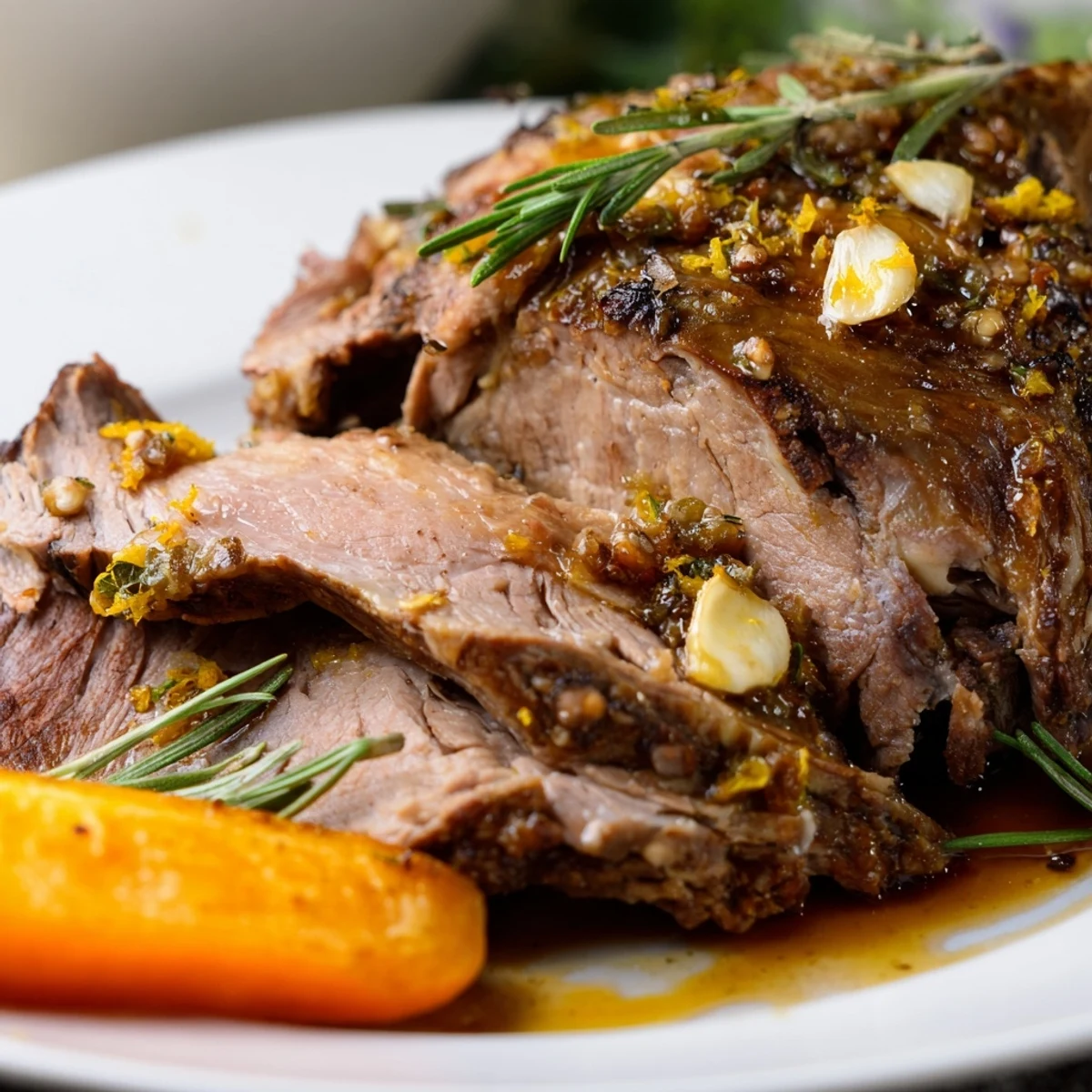
Save This dish showcases a leg of lamb slowly roasted to achieve tender, melt-in-the-mouth texture. Garlic cloves are inserted into deep slits of the lamb, infusing rich aroma. A mixture of olive oil, lemon zest and juice, rosemary, thyme, salt, and pepper is rubbed all over to enhance flavor. Root vegetables such as carrots, onions, and baby potatoes roast beneath, absorbing delightful pan juices. The lamb is covered for most of the cooking, then browned uncovered to create a beautifully crisp exterior. Resting the meat before carving ensures juicy, tender slices, perfect for a memorable Mediterranean-inspired meal.
The first time I roasted a whole leg of lamb, I was terrified. I'd watched my uncle carve one at a family dinner years ago, and it seemed impossibly elegant, impossibly complicated. But standing in my kitchen one Sunday afternoon with a bone-in leg waiting on the counter, I realized the magic wasn't in technique—it was in patience and the honest simplicity of garlic, lemon, and time. Three hours in a low oven transforms something intimidating into the most forgiving, generous centerpiece you'll ever serve.
I made this for my neighbor when she helped me move, and she called me weeks later just to ask how I did it. She'd been telling everyone at work that I was secretly a fancy cook. The truth was simpler: I'd just given something enough time and attention. She brought her husband over the next month specifically to eat this, and that's when I knew the recipe had stopped being mine and become something worth sharing.
Ingredients
- Leg of lamb (2–2.5 kg / 4.5–5.5 lb), bone-in: The bone conducts heat beautifully and adds flavor to the pan juices. Don't trim it yourself; ask your butcher to score the fat layer in a crosshatch pattern.
- Olive oil (2 tbsp): This is your base for the paste that seals in moisture. Use something you'd actually eat on bread.
- Garlic cloves (8), peeled and halved: Each one becomes soft and sweet, almost jammy. The slits cradle them perfectly, and they perfume the entire roast.
- Lemons (2, zest and juice separated): The zest goes into the paste for brightness; the juice balances the richness. Fresh is non-negotiable here.
- Fresh rosemary (2 tbsp, finely chopped) or dried (2 tsp): This is the soul of the dish. If you have fresh, bruise it slightly between your fingers before using to release oils.
- Fresh thyme leaves (1 tbsp) or dried (1 tsp): Thyme plays softer than rosemary, rounding out the flavor without taking over.
- Kosher salt (2 tsp) and freshly ground black pepper (1 tsp): Salt this generously; the long, slow cooking won't season it further, so don't hold back.
- Carrots, onions, and potatoes (optional): These aren't garnish—they're co-stars that soak up the pan drippings and become as important as the meat.
- Dry white wine or low-sodium chicken broth (1 cup): Wine adds subtle acidity and deepens the glaze; broth is earthier. Either works, but wine feels ceremonial.
Instructions
- Set your oven and prepare the pan:
- Preheat to 150°C (300°F). This low, slow heat is the whole secret—it keeps the meat tender and the exterior from burning before the inside cooks through.
- Get the lamb ready for flavor:
- Pat the lamb completely dry with paper towels. This matters more than you'd think; moisture on the surface stops browning and keeps garlic from sticking. Using a sharp knife, make deep slits all over the leg, about 3 centimeters apart, thinking of them as pockets for flavor.
- Tuck in the garlic and herbs:
- Push a garlic half and a small pinch of rosemary into each slit. Use your fingers to be gentle—you're not punching a hole, you're creating little flavor bombs throughout the meat that will emerge as the lamb cooks.
- Make the seasoning paste:
- In a small bowl, combine olive oil, lemon zest, lemon juice, the rest of the rosemary, thyme, salt, and pepper. Stir until it's almost paste-like, smelling absolutely incredible.
- Coat the lamb:
- Use your hands or a brush to rub this mixture all over the lamb, getting into crevices and under any loose skin. This is not a delicate step; be thorough and confident.
- Arrange the vegetables and roast:
- Scatter the carrots, onions, and potatoes in your roasting pan, then set the lamb on top. Pour the wine into the base of the pan, not over the lamb. Cover everything tightly with foil and slide it into the oven for 2.5 hours. The foil traps steam and keeps everything moist.
- Brown the exterior:
- Remove the foil, increase the heat to 200°C (400°F), and roast uncovered for 30 minutes. The meat will deepen to mahogany, the vegetables will caramelize, and the kitchen will smell like a restaurant. Resist the urge to peek; just let it finish.
- Rest and serve:
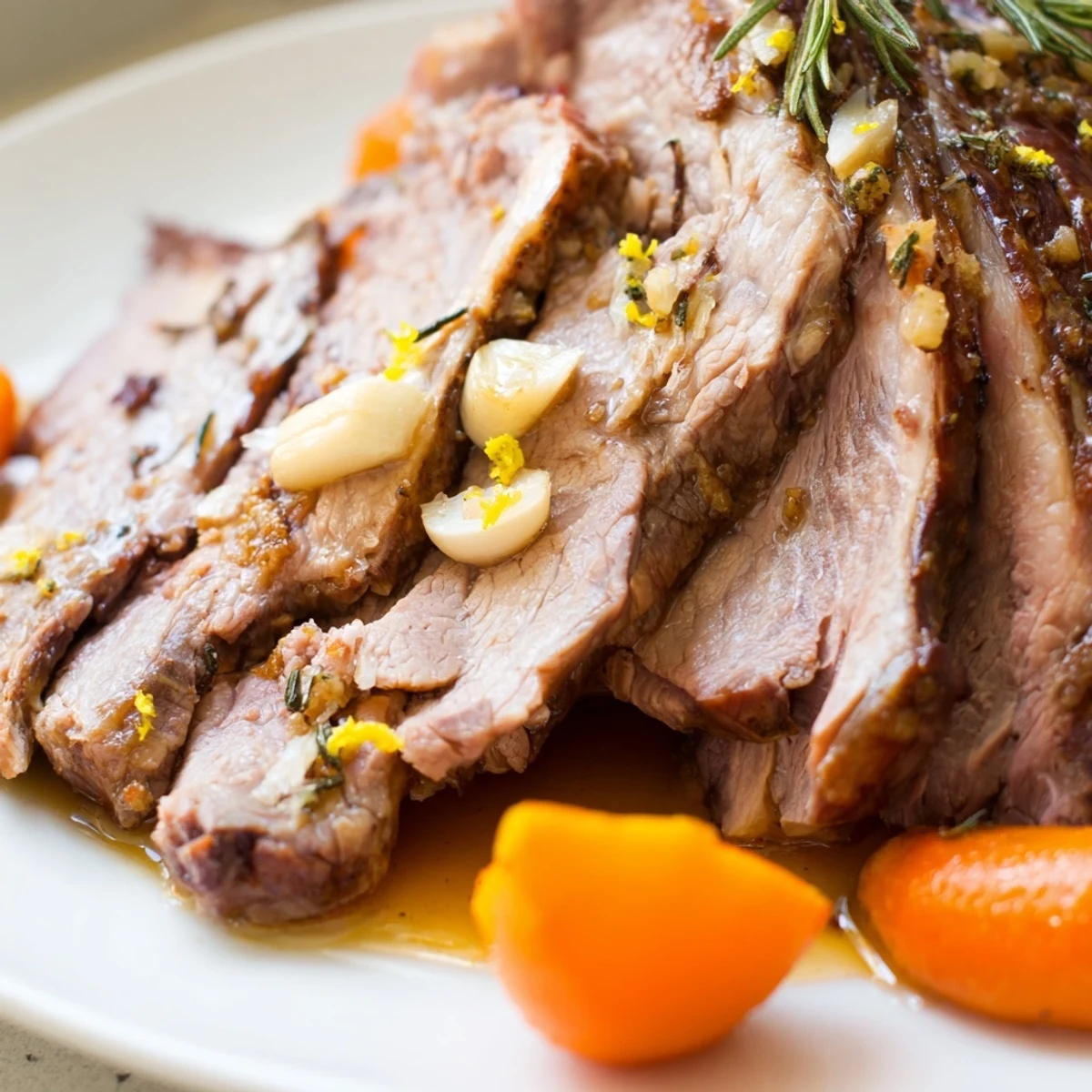
- When the lamb is done, transfer it to a carving board, loosely cover it with foil, and let it rest for 15 minutes. This resting time is when the fibers relax and reabsorb the juices. Carve, serve with the vegetables and pan juices, and watch people's faces.
 Save
Save The moment my sister took her first bite, she closed her eyes. No words, just that expression that means something's gone right. That's when I understood that food isn't really about following instructions; it's about giving something enough time and respect to become exactly what it's supposed to be.
Why This Cut Matters
A leg of lamb is forgiving in a way that smaller cuts aren't. The bone distributes heat evenly, and the meat has enough marbling to stay tender even if your timing is slightly off. This cut rewards patience rather than demanding precision, which is why it's perfect for feeding people you want to impress without stressing yourself into unhappiness.
Making It Your Own
The beauty of this recipe is how easily it adapts. If you love lemon, add zest to the pan alongside the vegetables. If rosemary isn't your thing, swap it for oregano or thyme. The structure—low heat, long time, good fat, acid—stays the same, but the flavor can shift with whatever's calling to you. I once added a jar of olives and some dried apricots in the last hour, and it became something entirely different but equally delicious.
Wine and Leftovers
Pair this with a full-bodied red like Syrah, Cabernet Sauvignon, or even a Châteauneuf-du-Pape if you're feeling generous. The richness of the lamb stands up to those wines beautifully, and somehow the dinner feels more complete. If you have leftovers, shred the meat and build sandwiches the next day, or toss it into salads. It keeps for three days in the refrigerator and reheats gently in a low oven with a splash of water, emerging almost as good as day one.
- Make a double batch if feeding more than six people; the timing stays the same, just give yourself a larger roasting pan.
- If your pan isn't large enough for vegetables, roast them separately on another tray in the same oven.
- Invest in a good meat thermometer—it removes all guesswork and keeps you from overcooking something this precious.
 Save
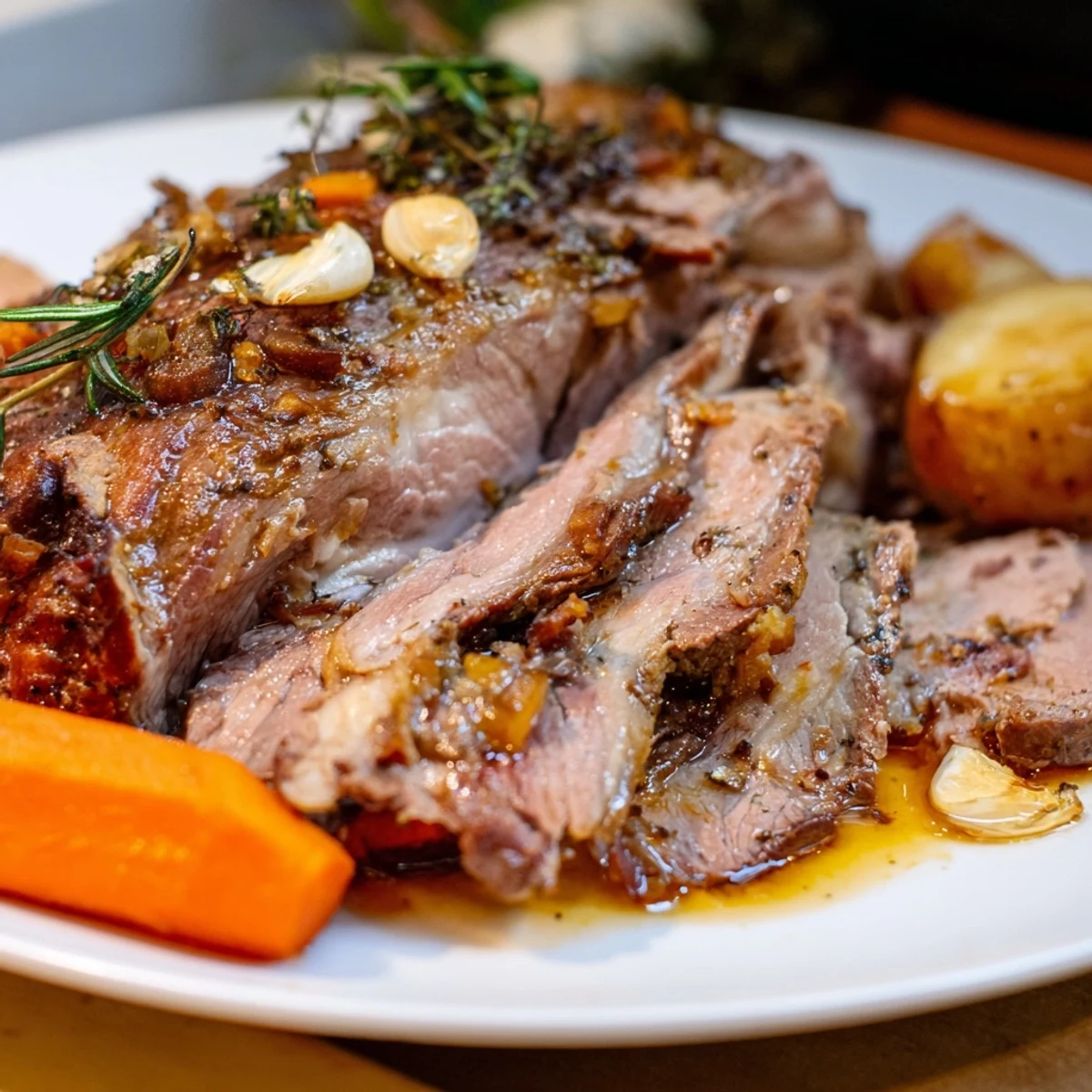
Save This dish is the kind that deserves a table where people linger, where second glasses get poured, and where the meal becomes memory. Make it once and you'll understand why it's been a centerpiece of celebration for centuries.
Recipe FAQs
- → How do you keep the lamb moist during roasting?
-
Covering the lamb with foil during most of the roasting time traps steam, keeping the meat juicy and tender.
- → Why are garlic cloves inserted into the lamb?
-
Inserting garlic into slits allows the flavor to penetrate deeply, offering a fragrant, savory boost throughout the meat.
- → Can other vegetables be roasted alongside the lamb?
-
Yes, carrots, onions, and baby potatoes work well, but sweet potatoes or parsnips are tasty alternatives.
- → What liquid options enhance roasting flavors?
-
Dry white wine or low-sodium chicken broth added to the pan base adds moisture and subtle richness to the dish.
- → How long should the lamb rest before carving?
-
Letting the lamb rest loosely covered for 15 minutes allows juices to redistribute for more tender slices.