
 Save
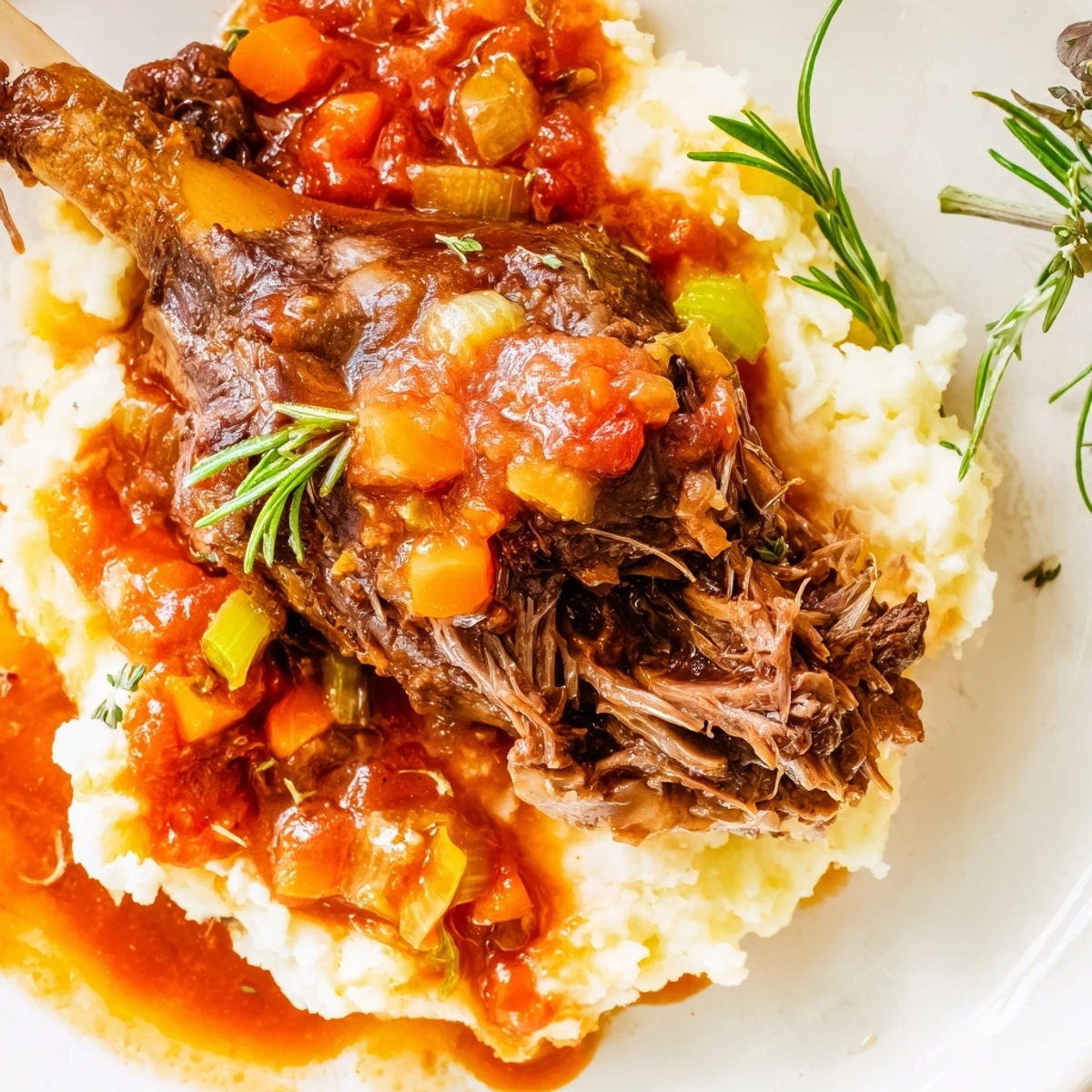
Save Experience the rich, savory flavors of tender lamb shanks slowly braised in a fragrant tomato and herb sauce. The lamb is first seared to lock in juices, then cooked gently with onions, carrots, celery, garlic, and a blend of rosemary, thyme, and oregano. The sauce is enriched with crushed tomatoes, red wine, and stock, simmered until thick and flavorful. This dish achieves perfect melt-in-your-mouth texture ideal for a comforting main course.
There's something about a cold winter evening that makes you crave meat so tender it dissolves on your tongue. I discovered these lamb shanks years ago when a friend insisted I stop being timid about slow cooking and just commit to a braise. Three hours in a low oven, the house filling with the smell of tomato and rosemary, and suddenly I understood why this dish has been beloved across the Mediterranean for generations. Now I make it whenever I want to feel like I've done something worthwhile in the kitchen.
I remember the night I served this to my sister and her husband, who kept coming back for seconds, then thirds, eventually just eating straight from the pot with bread. That's when I realized this wasn't fancy cooking—it was honest cooking, the kind that makes people linger at the table and forget about their phones.
Ingredients
- Lamb shanks: These meaty bones are perfect for braising because they're loaded with collagen that transforms into silky gelatin during the long cook, creating sauce that clings to everything.
- Onions, carrots, celery: This trio forms the foundation—the soffritto that catches all the browned meat bits and builds depth without any fussing.
- Garlic: Mince it fine so it melts into the sauce rather than turning into chewy bits you have to hunt for.
- Crushed tomatoes: Canned is actually better here than fresh because the acidity and flavor have already concentrated.
- Beef or lamb stock: This adds body and salt in a way water never could; warm it first if you have time, it speeds up the cooking slightly.
- Dry red wine: Don't use anything you wouldn't drink; cheap wine stays cheap-tasting no matter how long it cooks.
- Tomato paste: A spoonful adds umami that makes people wonder what your secret ingredient is (it's just patience).
- Rosemary and thyme: Fresh herbs matter here because their oils will perfume the entire pot; dried works if you must, but use less.
- Bay leaves and oregano: Bay leaves flavor the sauce but must be fished out at the end, and oregano adds a Mediterranean warmth.
- Olive oil: Good enough to taste in the finished sauce, but not your most precious bottle.
Instructions
- Get your oven ready and season the meat:
- Preheat your oven to 160°C (320°F)—this gentle heat is crucial because high heat will dry the meat instead of tenderizing it. Pat the lamb shanks dry with paper towels, then be generous with salt and pepper on all surfaces; don't be shy.
- Brown the lamb until the outside is golden:
- Heat olive oil in a large Dutch oven over medium-high heat until it shimmers, then place the shanks in carefully to avoid splashing. Let them sit undisturbed for 2–3 minutes per side until they develop a deep brown crust—this is where flavor comes from, so resist the urge to move them around.
- Build the flavor base with vegetables:
- Remove the lamb and add your chopped onions, carrots, and celery to the same pot, scraping up any browned bits stuck to the bottom. Sauté for 5–7 minutes until the onions turn translucent and the carrots start to soften at the edges, then add garlic and cook for just 1 minute more.
- Deglaze with wine and paste:
- Stir in the tomato paste and let it cook for about 1 minute until it darkens slightly and smells sweet, then pour in the red wine. Scrape the bottom of the pot vigorously to release all those caramelized bits—this is deglazing and it's non-negotiable for flavor.
- Build the braising liquid:
- Add the crushed tomatoes, stock, rosemary, thyme, bay leaves, and oregano, stirring everything together so the herbs are evenly distributed. The liquid should smell complex and alive at this point.
- Return the lamb and braise low and slow:
- Nestle the browned lamb shanks back into the pot so they're mostly submerged, bring the whole thing to a gentle simmer on the stovetop, then cover tightly with a lid. Transfer to the oven and let it cook for 2.5–3 hours; resist opening the lid constantly—trust the process and check only once halfway through.
- Finish the sauce and plate:
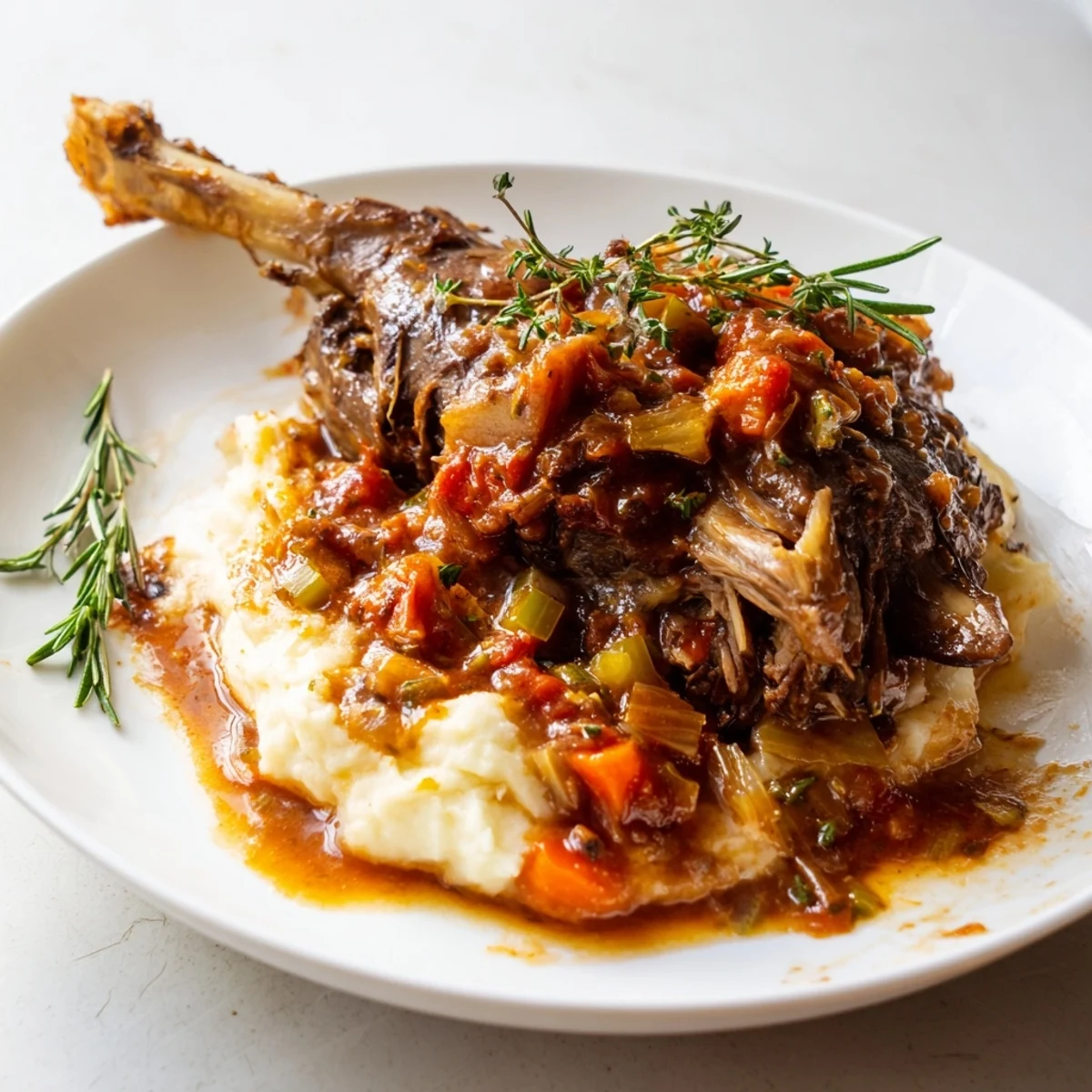
- Remove the lamb shanks carefully (they'll be fragile) and tent with foil to keep warm. Skim excess fat from the sauce surface, then simmer uncovered on the stovetop for 10–15 minutes if you prefer a thicker consistency. Serve the shanks in bowls with sauce spooned generously over top.
 Save
Save The moment when a dinner guest realizes they can pull the meat from the bone without a knife—that's when you know you've nailed it. That moment has become the whole point for me.
Why This Braise Works So Well
Lamb shanks are forgiving in ways that tender cuts aren't. The long, slow braise breaks down the collagen in the connective tissue, transforming what could be tough and chewy into something that practically dissolves. The sauce doesn't just cook alongside the meat—it becomes part of it, trading flavors back and forth until you can't tell where one ends and the other begins.
Timing and Flexibility
Three hours in the oven is the sweet spot, but anywhere from 2.5 to 3.5 hours works depending on the size of your shanks and how accurately your oven runs. If you have a slow cooker and an extra 4 hours of cooking time, 7–8 hours on low will give you even more tender results. The beauty is that this is almost impossible to overcook once it reaches that initial tenderness.
Serving and Storage
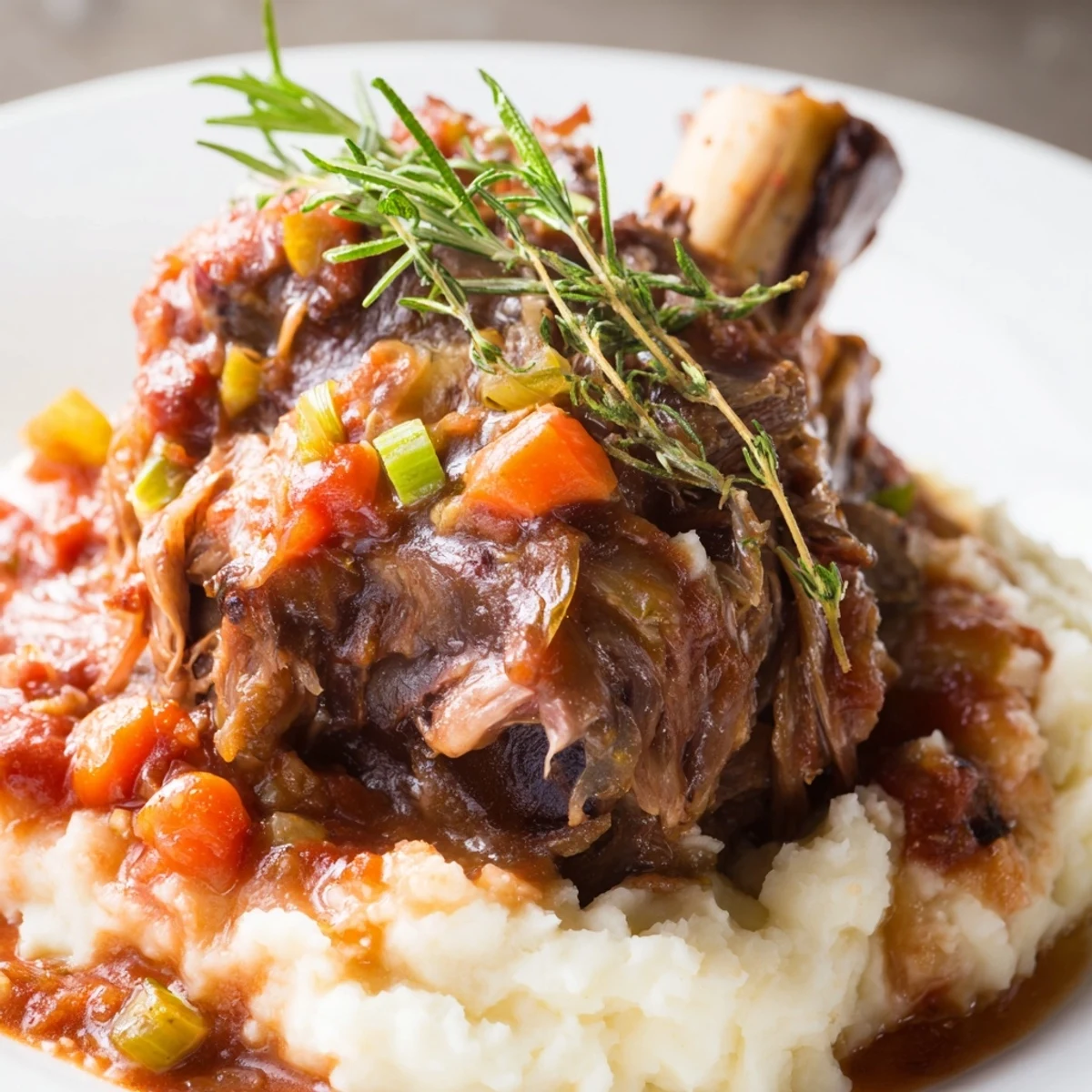
This dish is best served with something creamy—mashed potatoes soak up the sauce without arguing, and polenta creates a similar comforting effect. Crusty bread works too, purely for sauce-wiping purposes. If you're planning ahead, this tastes better the next day and improves even more the day after that; the flavors settle and deepen while the braising liquid thickens slightly as it cools.
- Make it a day or two ahead, refrigerate it, and skim the solidified fat from the top before reheating—this makes the sauce cleaner-tasting and easier to manage.
- If you're adding orange zest or chili flakes as the notes suggest, stir them in during the last 15 minutes of cooking so they stay bright.
- Leftover meat and sauce can be shredded and turned into an incredible pasta sauce or sandwich filling, so don't hesitate to make extra.
 Save
Save Slow cooking isn't just a technique—it's an act of care, a way of saying that something is worth your time and attention. This dish reminds you of that every time you make it.
Recipe FAQs
- → How do I achieve tender lamb shanks?
-
Slow cooking at low heat breaks down collagen, resulting in tender, falling-off-the-bone meat. Searing beforehand locks in juices.
- → Can I use beef shanks instead of lamb?
-
Yes, beef shanks work well, offering similar texture and flavor when cooked slowly in the tomato herb sauce.
- → What sides complement slow-cooked lamb shanks?
-
Creamy mashed potatoes, polenta, or crusty bread pair nicely to soak up the rich sauce.
- → How to thicken the tomato herb sauce?
-
After removing the meat, simmer the sauce uncovered for 10–15 minutes to reduce and concentrate flavors.
- → What herbs enhance the sauce's flavor?
-
Fresh rosemary, thyme, bay leaves, and dried oregano create a fragrant, balanced herbal profile.