
 Save
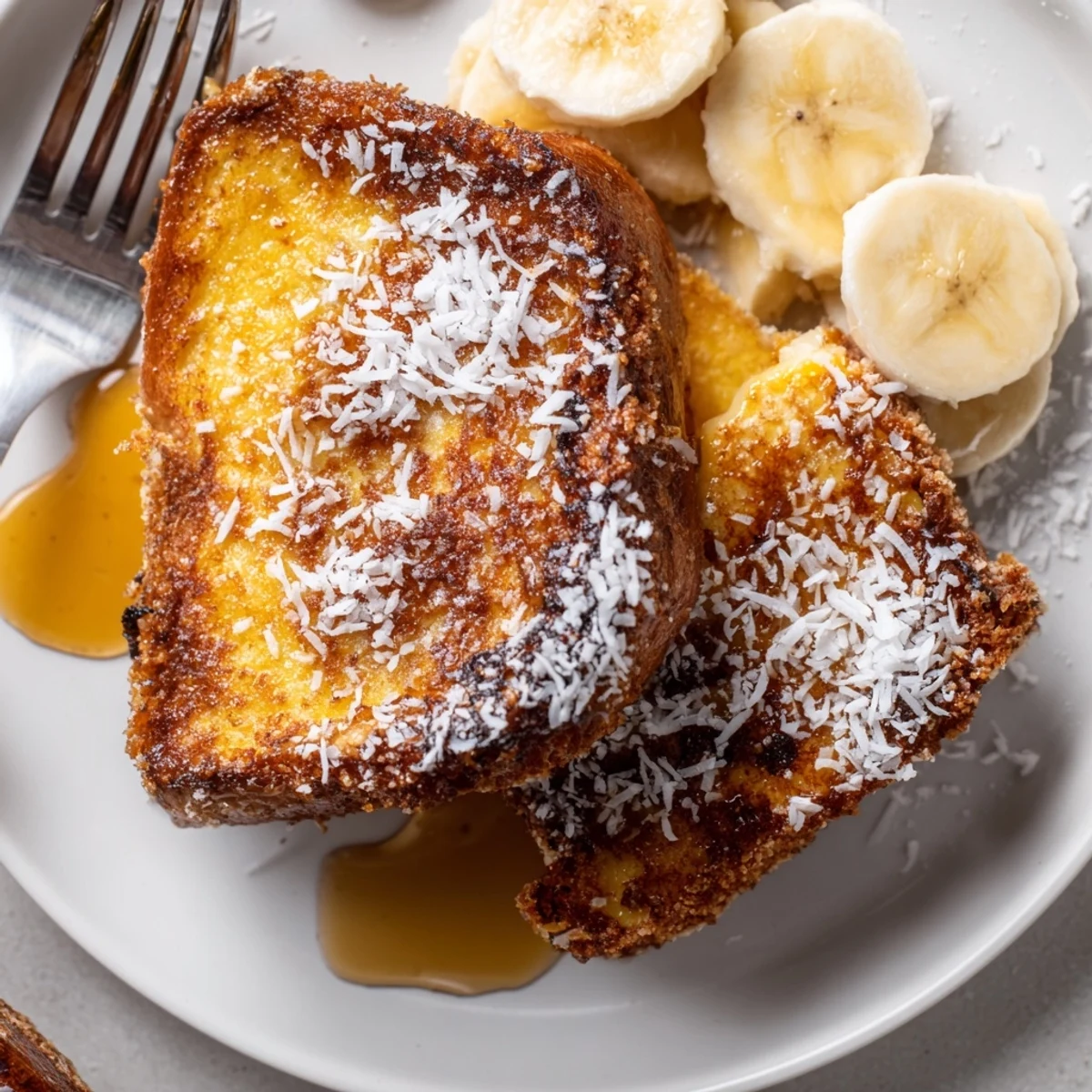
Save Soak brioche or challah slices in an egg-and-milk custard flavored with vanilla and cinnamon, press into shredded coconut (mix with optional panko for extra crunch), then pan-fry in butter and coconut oil until golden and crisp. Ready in about 25 minutes for four servings; serve warm with maple syrup, berries or banana. For a dairy-free version use coconut milk and only coconut oil.
The sizzle of butter hitting a hot skillet on a lazy Sunday morning is its own kind of therapy, but add toasted coconut to that symphony and you have something that pulls people out of bed before you even call them. I started making this coconut crusted French toast on a whim during a beach vacation when the only toppings available were a bag of shredded coconut and some stale bread. That happy accident turned into the most requested breakfast in my house, and now friends casually suggest brunch at my place just to see if it is on the menu.
My neighbor Linda stopped by one morning to return a borrowed casserole dish just as I was flipping the last golden slice onto a plate. She ended up sitting at my kitchen counter for an hour, drizzling maple syrup over a stack and telling me about her childhood in Trinidad where coconut showed up in almost every meal.
Ingredients
- Eggs (4 large): The backbone of your custard, and using large eggs ensures the right ratio of liquid to bread without guessing.
- Whole milk or coconut milk (240 ml): Coconut milk leans into the tropical theme and makes this dairy free, while whole milk gives a slightly richer, creamier soak.
- Granulated sugar (1 tablespoon): Just enough sweetness to caramelize the crust without making it taste like dessert for breakfast.
- Pure vanilla extract (1 teaspoon): Always use pure, never imitation, because the flavor carries through the coconut coating in a way you will notice.
- Ground cinnamon (1/2 teaspoon): A warm whisper that ties the coconut to the custard and makes the whole kitchen smell incredible.
- Salt (pinch): Do not skip this, because salt wakes up every other flavor and keeps the sweetness balanced.
- Brioche or challah bread (8 slices, about 2 cm thick): These enriched breads soak up custard like a dream and stay tender inside while the crust gets crisp.
- Unsweetened shredded coconut (100 g): Unsweetened is key here because sweetened coconut will burn before the French toast cooks through.
- Panko breadcrumbs (55 g, optional): Mixing panko with the coconut adds an extra layer of crunch that holds up even as the toast sits.
- Butter (2 tablespoons): Butter brings flavor that coconut oil alone cannot match, and the combination of both fats is magic.
- Coconut oil (2 tablespoons): Raises the smoke point slightly so your coconut crust browns evenly without turning dark too fast.
- Maple syrup, fresh berries, sliced bananas, powdered sugar (to serve): Pick one or pile them all on, because this French toast can handle whatever you throw at it.
Instructions
- Whisk the custard:
- Crack the eggs into a shallow dish and pour in the milk, sugar, vanilla, cinnamon, and a pinch of salt, then whisk until everything is smooth and evenly blended with no streaks of yolk visible.
- Set up the crust station:
- In a second shallow dish, toss the shredded coconut and panko together with your fingers so the textures are evenly mixed and ready for pressing.
- Soak the bread:
- Lay each slice into the custard for about ten seconds per side, letting it drink up the liquid without going limp, because soggy bread will fall apart in the pan.
- Press on the coconut crust:
- Drop each soaked slice onto the coconut mixture and press gently but firmly on both sides so the flakes adhere in an even, generous layer with no bald spots.
- Heat the fats:
- Set a large nonstick skillet over medium heat and add both the butter and coconut oil, letting them melt together until the butter just stops bubbling and the kitchen smells faintly sweet.
- Fry until golden:
- Place the coated slices in the skillet without crowding and cook two to three minutes per side until the coconut is deeply golden and crisp, adjusting the heat down if it browns too quickly.
- Serve immediately:
- Transfer the hot slices to plates right away and finish with maple syrup, a tumble of fresh berries and banana slices, or a soft shower of powdered sugar.
 Save
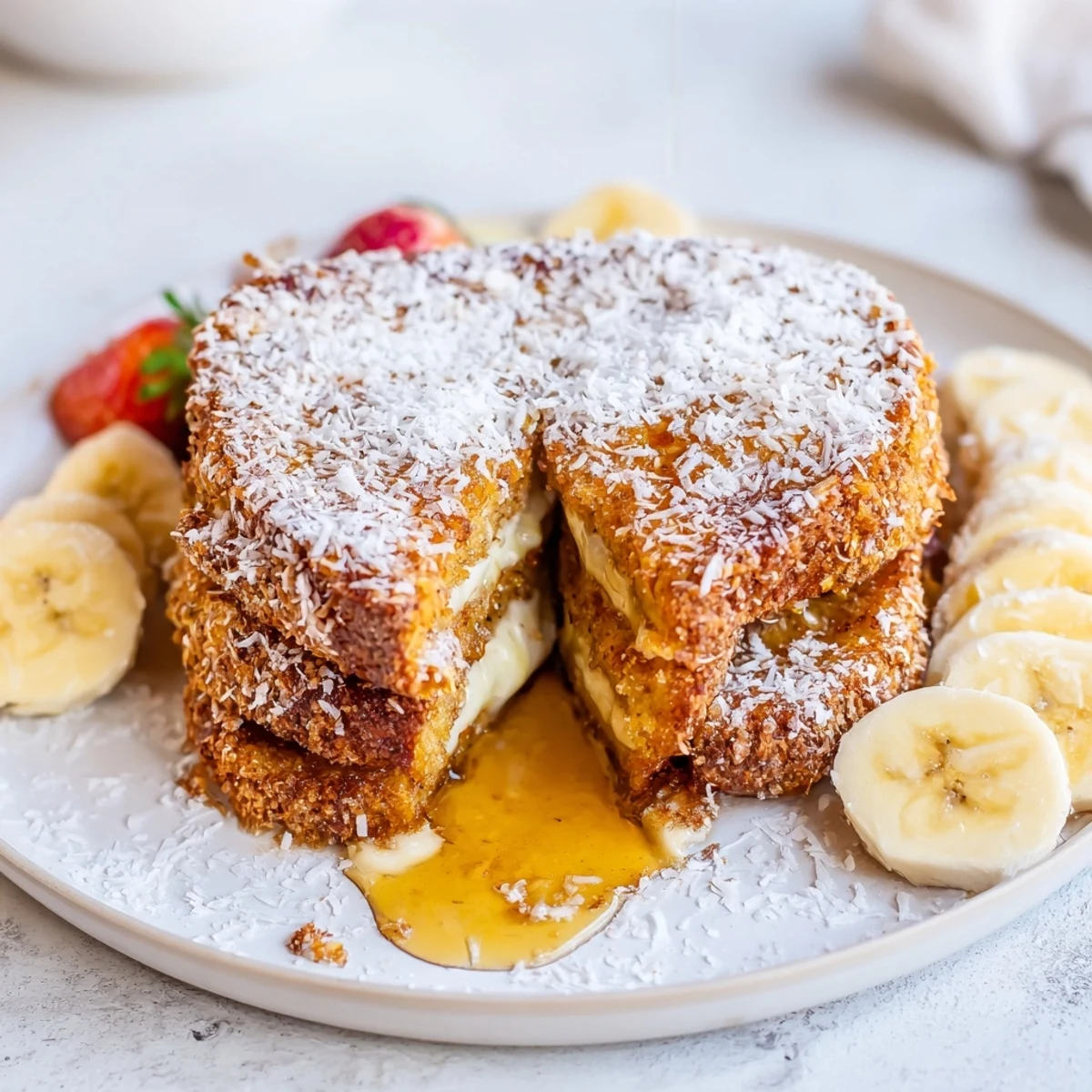
Save There is something deeply satisfying about watching someone bite into this French toast and pause mid chew because they did not expect that crunch followed by that soft sweetness.
What Kind of Bread Actually Works Best
Brioche is my first choice every time because the butter already woven into the dough makes the interior almost pudding like when it soaks up the custard. Challah runs a close second with its slightly eggy richness and sturdy crumb that holds together beautifully through the dipping and pressing. Day old bread actually outperforms fresh here because it absorbs the custard evenly instead of collapsing into mush, so if you have a loaf sitting around this is the perfect excuse to use it.
Making It Completely Dairy Free
Swapping the whole milk for full fat canned coconut milk is the easiest change and it amplifies the coconut flavor in a way that dairy milk never could. Use only coconut oil for frying and skip the butter entirely, because the coconut oil alone gives you a gorgeous golden crust with plenty of richness. Just shake the canned coconut milk well before measuring so the fat and liquid are combined, otherwise your custard will be uneven.
Keeping the Crunch Alive
The biggest enemy of crispy French toast is steam trapped against the plate, so if you are cooking for a crowd use a wire rack set over a baking sheet in a low oven to hold finished slices. This keeps air circulating underneath so the coconut crust stays shatteringly crisp while you work through the remaining batches.
- Never stack finished slices directly on top of each other or the bottom ones will turn soft within minutes.
- A quick thirty second hit in a hot skillet the next morning brings leftover slices back to life better than any toaster ever could.
- Serve the syrup on the side instead of pouring it over the stack so every bite of crust stays crunchy until the very last forkful.
 Save
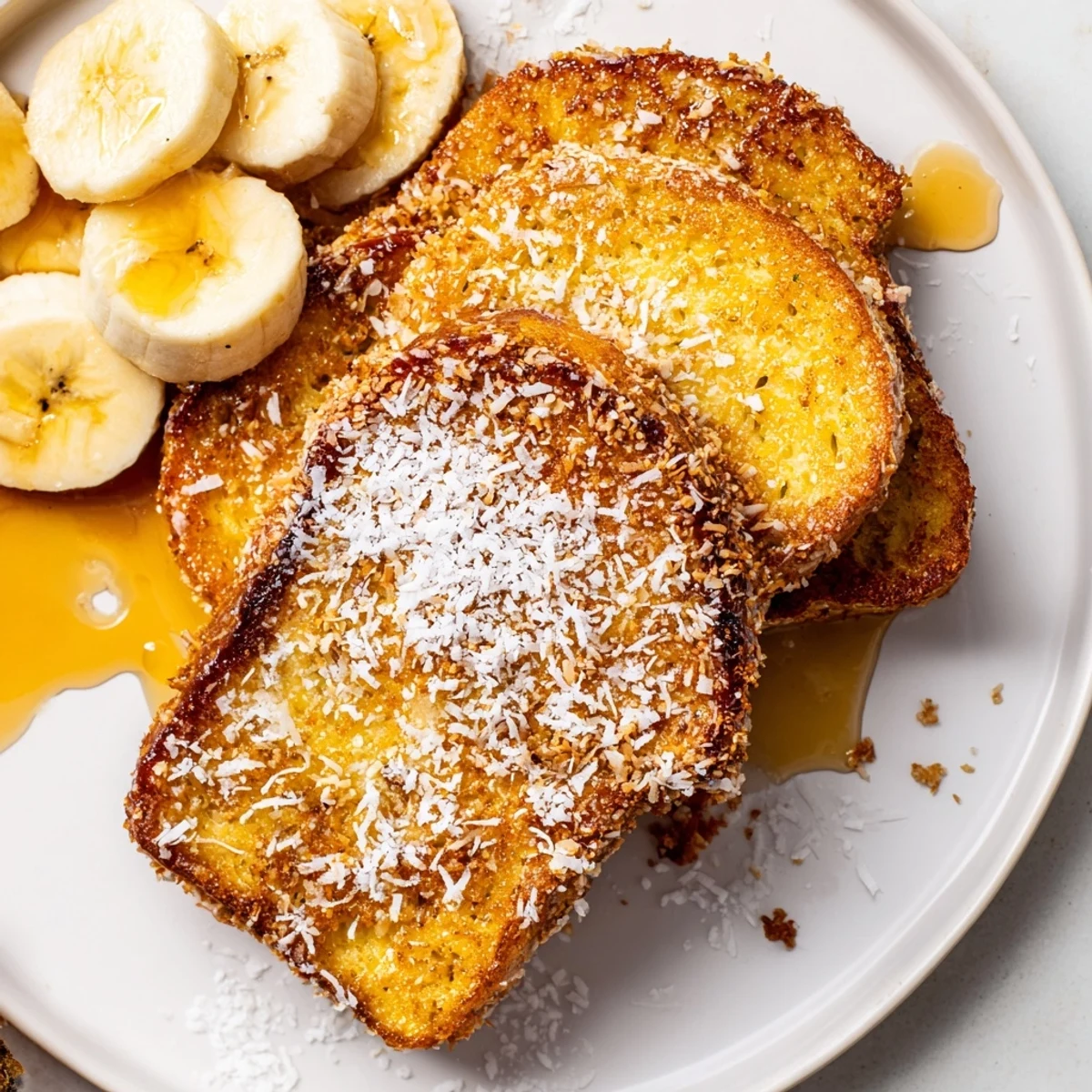
Save This is the kind of breakfast that turns an ordinary weekend into a small celebration, and honestly that is reason enough to keep shredded coconut in your pantry at all times.
Recipe FAQs
- → What bread works best?
-
Brioche or challah are ideal for their soft, rich crumb that soaks up the custard while holding structure. Thick-sliced white bread can substitute, but avoid very thin or stale slices that will fall apart when soaked.
- → How do I get the coconut extra crispy?
-
Toss shredded coconut with a little panko for added crunch and press firmly onto the soaked bread. Fry over medium heat in a mix of butter and coconut oil so the exterior browns without burning the coconut.
- → Can I make this dairy-free?
-
Yes. Use full-fat coconut milk in the custard and swap butter for extra coconut oil for frying. The coconut flavor will be more pronounced and the texture remains rich and custardy.
- → How do I prevent sogginess?
-
Don’t oversoak the bread — aim for well-coated but not dripping. Press the coconut on right after soaking and fry slices in batches on a preheated skillet so they sizzle immediately and form a crisp crust.
- → Can I bake instead of frying?
-
Yes. Arrange coated slices on a greased sheet, brush tops with melted butter or oil, and bake at 200°C (400°F) until golden, turning once. Baking yields a lighter finish but may be less uniformly crisp than pan-frying.
- → Best toppings to serve with it?
-
Classic pairings include warm maple syrup, fresh berries, sliced bananas, and a dusting of powdered sugar. A spoonful of yogurt or a drizzle of citrus-infused honey also brightens the dish.