
 Save
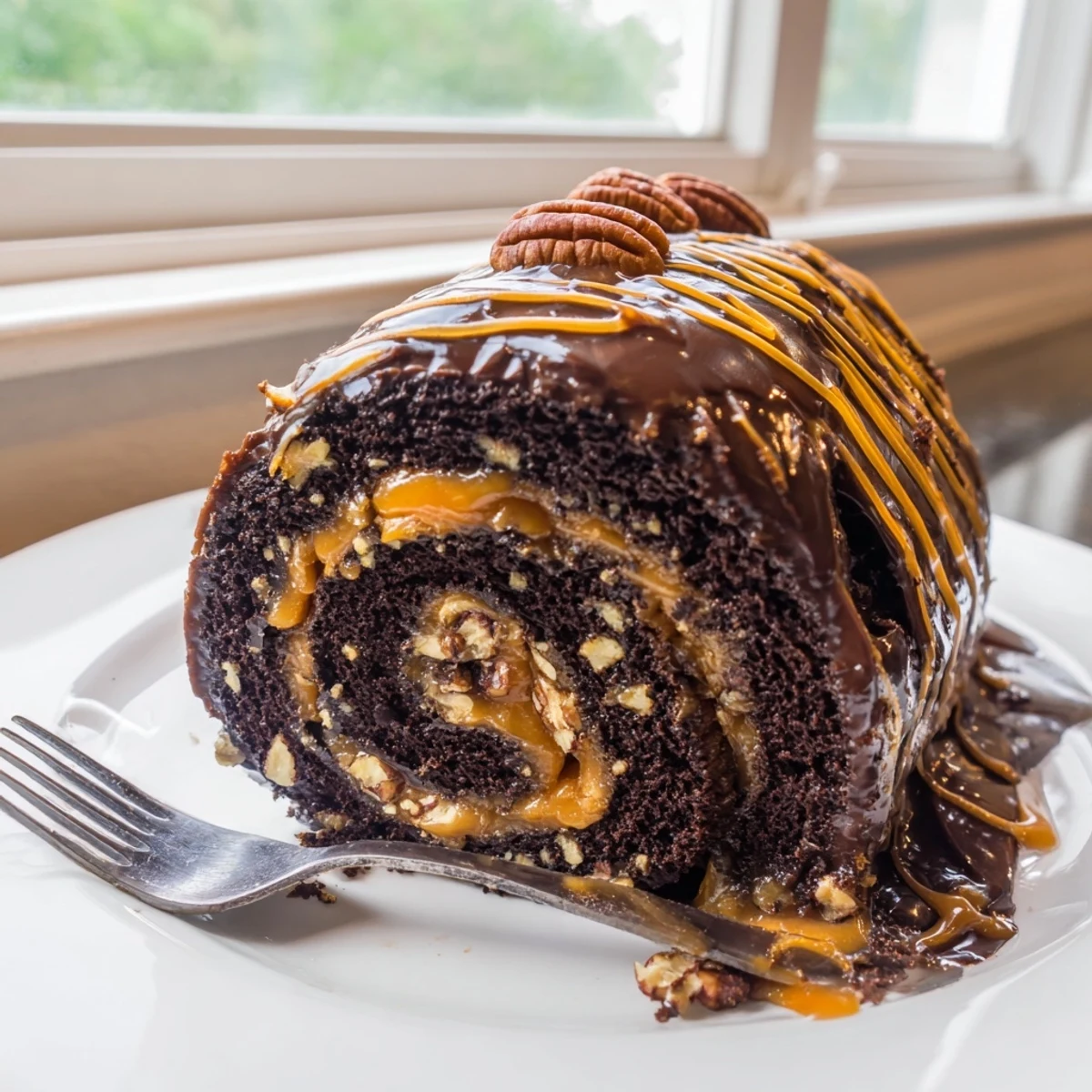
Save This chocolate caramel turtle cake roll combines a light, moist cocoa sponge with a luscious caramel filling and toasted pecans, all enrobed in a glossy chocolate ganache.
The sponge is baked flat, rolled while warm to set its shape, then filled once cooled for a perfect spiral slice every time.
Ready in about an hour, it serves 10 and is ideal for celebrations, holidays, or any occasion that calls for a show-stopping dessert.
The oven door had barely clicked shut when my niece burst into the kitchen asking if something was burning. It was just cocoa powder toasting in the batter, that deep roasted smell that fills every corner of the house and makes it impossible to wait. I had promised her a turtle cake roll for her birthday sleepover, and standing there with flour on my forehead and a whisk in hand, I realized I had never actually rolled a sponge before without cracking it.
My niece stood on a step stool next to me,负责sprinkling pecans across the caramel layer with the intense concentration only a ten year old can muster. She ate three slices before bed and still talks about it every Thanksgiving, even though we have never made it for Thanksgiving.
Ingredients
- Eggs (4 large, room temperature): Room temperature eggs whip to nearly triple their volume, which is the entire architecture of a sponge that rolls without shattering.
- Granulated sugar (100 g): Dissolves during beating and gives the sponge its tender chew.
- Vanilla extract (1 tsp): Rounds out the cocoa and keeps the caramel from tasting one dimensional.
- All purpose flour (70 g): Measured by weight if possible, because even a tablespoon too much makes the roll stiff.
- Unsweetened cocoa powder (30 g): Use a good quality Dutch processed one if you can find it for a darker color and deeper flavor.
- Baking powder (1/2 tsp) and salt (1/4 tsp): Just enough lift and seasoning to support the eggs.
- Thick caramel sauce (200 g): Store bought dulce de leche works beautifully here, or homemade if you have a spare hour and a candy thermometer.
- Chopped toasted pecans (70 g): Toast them yourself in a dry pan until fragrant, because the pre toasted ones always taste faintly of the plastic bag.
- Semi sweet chocolate (100 g) and heavy cream (90 ml): Together they become a ganache that sets with a soft shine and drips down the sides like a waterfall.
- Garnishes (pecan halves and extra caramel): These are the finishing touches that make people gasp when you carry it to the table.
Instructions
- Prepare the pan and oven:
- Heat your oven to 180 degrees C (350 degrees F) and line a 10 by 15 inch jelly roll pan with parchment, greasing it lightly so the cake releases cleanly later.
- Whip the eggs until transformed:
- Beat the eggs, sugar, and vanilla on high speed for a full five minutes until the mixture is pale, thick, and falls in ribbons from the beater. This step is not negotiable.
- Fold in the dry ingredients:
- Sift the flour, cocoa, baking powder, and salt directly over the egg mixture and fold gently with a spatula, cutting through the center and sweeping around the edge until no dry streaks remain.
- Bake the sponge:
- Pour the batter into the pan and spread it evenly with an offset spatula. Bake for 10 to 12 minutes, until the surface springs back when you press it lightly with your fingertip.
- Roll while hot:
- Turn the hot cake onto a kitchen towel dusted with powdered sugar, peel away the parchment, and roll it up snugly from the short end with the towel inside. Let it cool completely in this shape so it memorizes the curve.
- Fill with caramel and pecans:
- Unroll the cooled cake gently, spread the caramel sauce evenly across the surface, and scatter the toasted pecans over it. Reserve two tablespoons of caramel for drizzling later.
- Roll it back up:
- Roll the cake again, this time without the towel, and place it seam side down on your serving platter. Do not stress over small cracks because the ganache will cover everything.
- Make the ganache:
- Pour hot (not boiling) cream over the chopped chocolate in a heatproof bowl, let it sit untouched for two minutes, then stir from the center outward until you have a glossy, smooth sauce. Let it thicken for a few minutes so it coats rather than pools.
- Glaze and garnish:
- Pour the ganache over the roll, letting it cascade down the sides, then drizzle with the reserved caramel and press pecan halves into the top. Chill for 20 minutes before slicing so everything sets into clean, beautiful spirals.
 Save
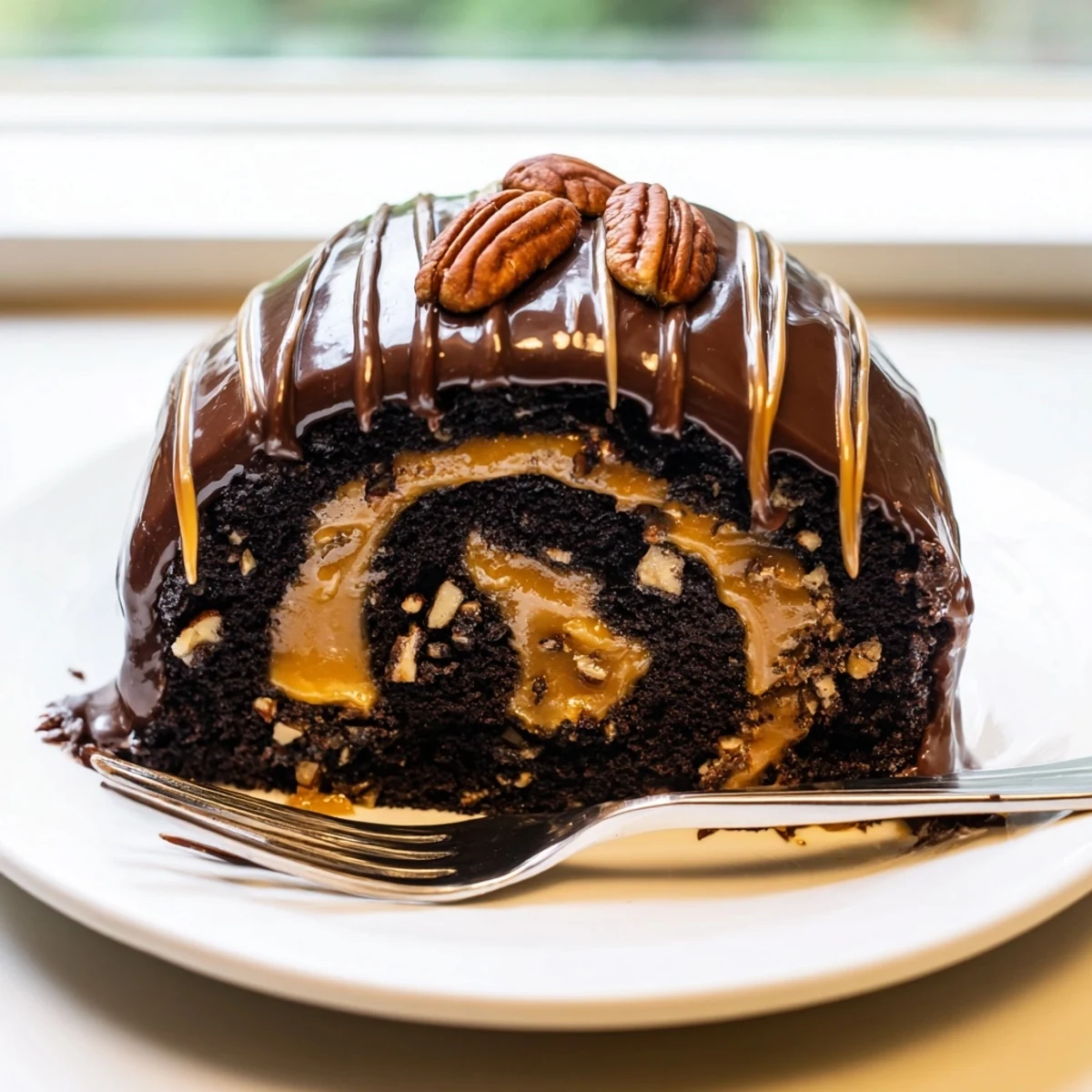
Save The moment I carried this cake roll to the table, candlelight bouncing off the ganache, my niece whispered that it looked like something from a bakery window in Paris. I have never told her it took less than an hour of active work.
Getting The Roll Right Without Losing Your Nerve
The first time I made a Swiss roll, I overthought every motion and ended up with a cake that looked like it had been through a laundry cycle. The trick is to move quickly and with confidence, rolling while the sponge is still warm and flexible. Dust your towel generously with powdered sugar so nothing sticks, and do not pause halfway through the roll. Even if a small crack forms, the ganache blanket hides a multitude of sins.
Choosing The Right Caramel Makes All The Difference
Thin caramel topping meant for ice cream will turn your cake into a slippery mess that oozes out of every edge. You want something thick enough to hold its shape, like dulce de leche or a caramel that has been cooked to the firm ball stage. If all you have is a thin sauce, reduce it gently in a saucepan for a few minutes until it coats the back of a spoon. The pecans help anchor everything in place, so do not skimp on them.
Serving And Storing Like A Pro
This cake roll actually improves after a night in the fridge because the caramel melts into the sponge and creates a fudgy, gooey center that tastes like pure comfort. Let it sit at room temperature for about twenty minutes before serving so the ganache softens and the flavors open up.
- A serrated knife dipped in hot water and wiped clean between cuts gives the neatest slices.
- Leftovers keep well wrapped in the fridge for up to three days, though they rarely last that long.
- Freeze individual slices wrapped tightly in plastic for up to one month and thaw overnight in the fridge.
 Save
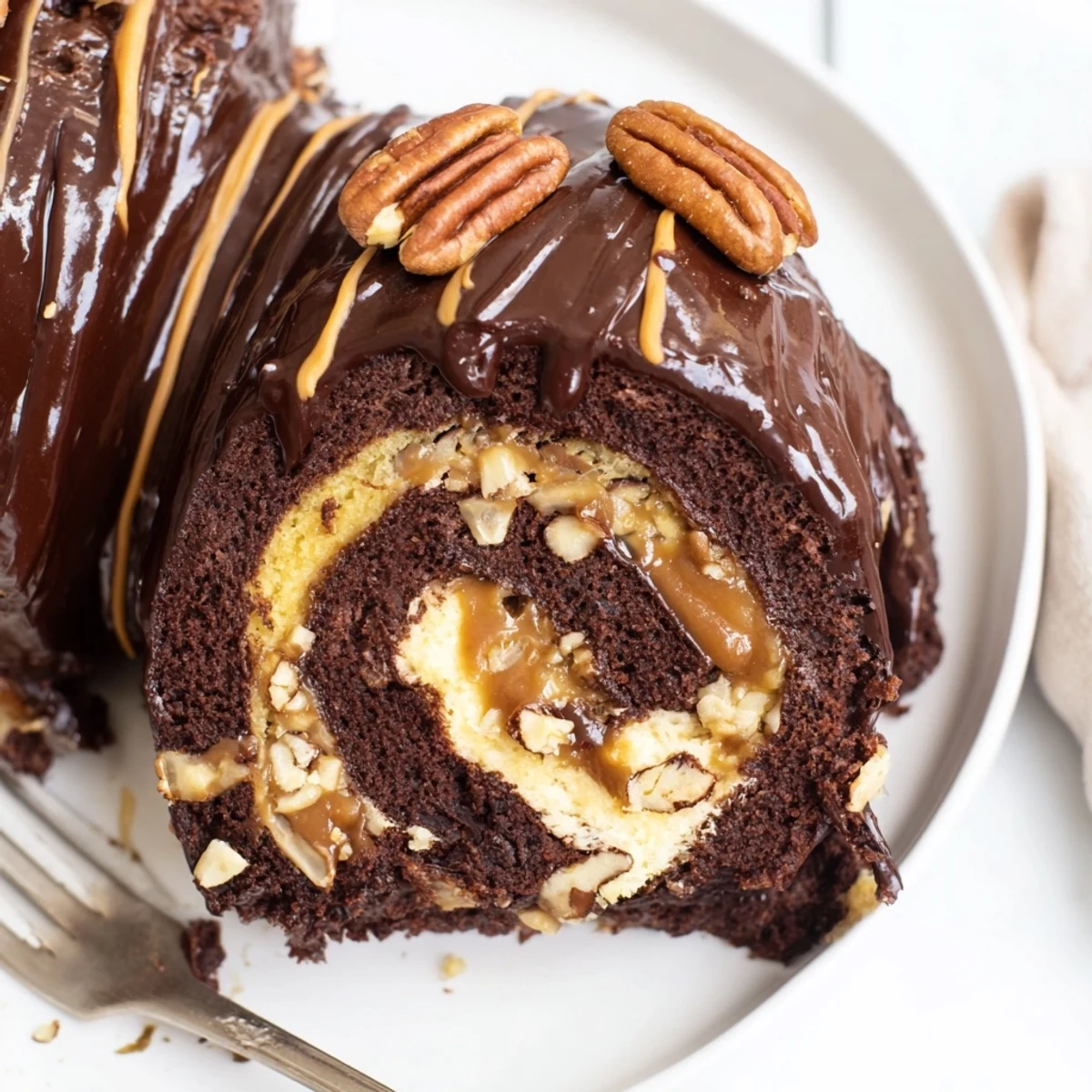
Save Every time I make this roll, I think of flour dusted countertops and a small voice asking if we can eat it yet, and that is really the best part of any recipe. Share it with someone who will wait by the oven with you.
Recipe FAQs
- → Why does the cake need to be rolled while still warm?
-
Rolling the sponge while it's still warm and flexible prevents cracking. Once cooled in the rolled position, the cake holds its shape and unrolls easily for filling without breaking.
- → Can I make the caramel filling from scratch?
-
Yes, you can use homemade caramel sauce. A thick, spreadable dulce de leche or condensed milk caramel works best. Avoid thin sauces that could make the sponge soggy.
- → What can I substitute for pecans?
-
Walnuts are the closest substitute and work beautifully. You could also try toasted hazelnuts or almonds for a different flavor profile while maintaining the signature crunch.
- → How should I store leftover cake roll?
-
Cover the cake roll tightly and refrigerate for up to 3 days. Allow it to sit at room temperature for about 20 minutes before serving so the sponge softens and the flavors fully develop.
- → Can I freeze this chocolate cake roll?
-
Yes, wrap it tightly in plastic wrap and then foil. Freeze for up to 2 months. Thaw overnight in the refrigerator, then bring to room temperature before slicing and serving.
- → Why did my sponge crack when unrolling?
-
Cracking usually happens if the cake cooled too much before the initial roll, or if it was overbaked. Bake just until the sponge springs back when touched, and roll immediately while still hot.